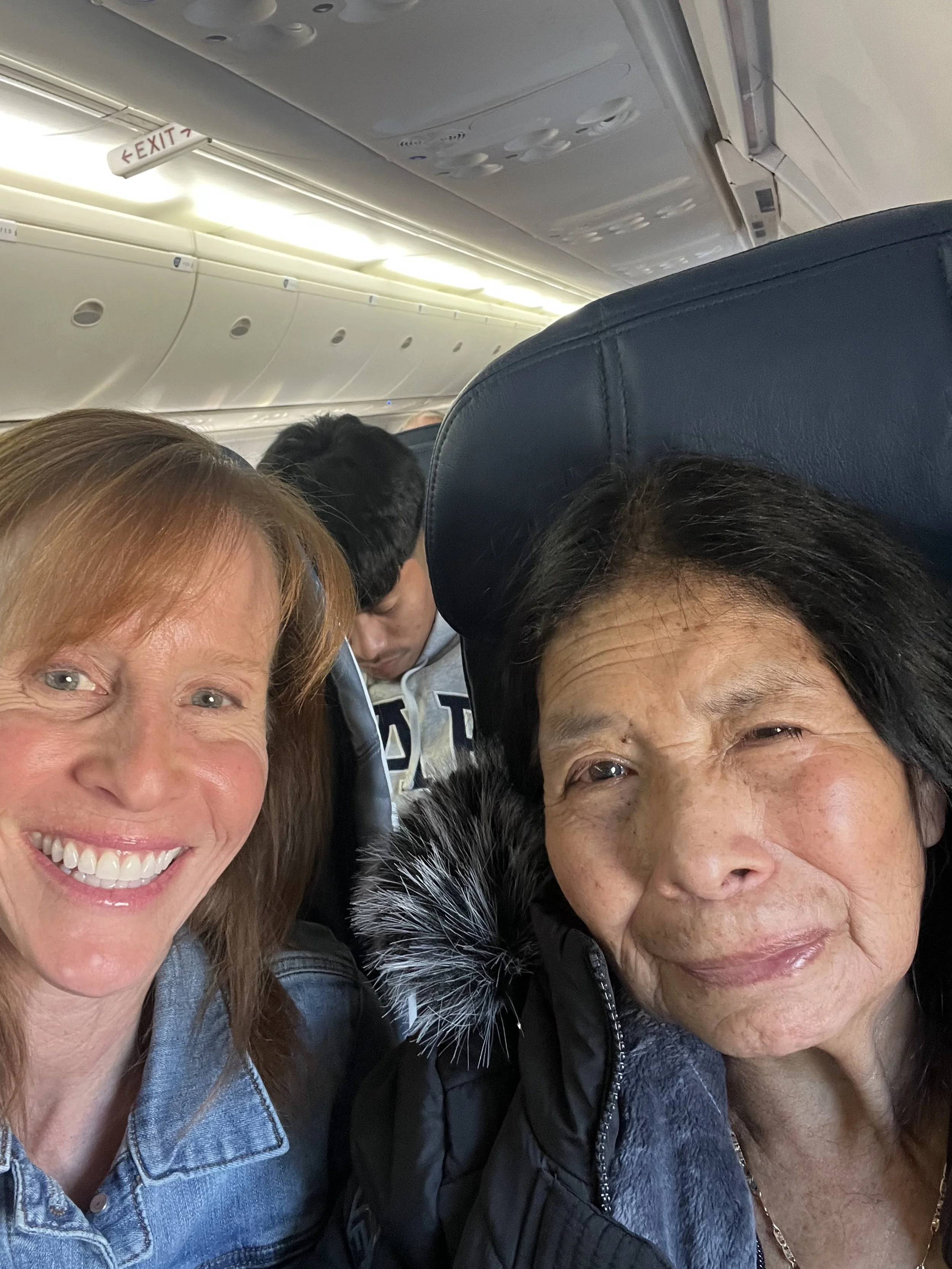
The travel day to get to Guatemala began very early, around 3 AM. We flew through Atlanta. Our first taste of Guatemalan culture was sitting right in our row in the form of a 99-year-old Guatemalan abuela (grandmother) traveling back home and separated from her granddaughter on the flight. We quickly became her “family,” helping her to buckle and unbuckle her seatbelt and utilize the restroom as needed.
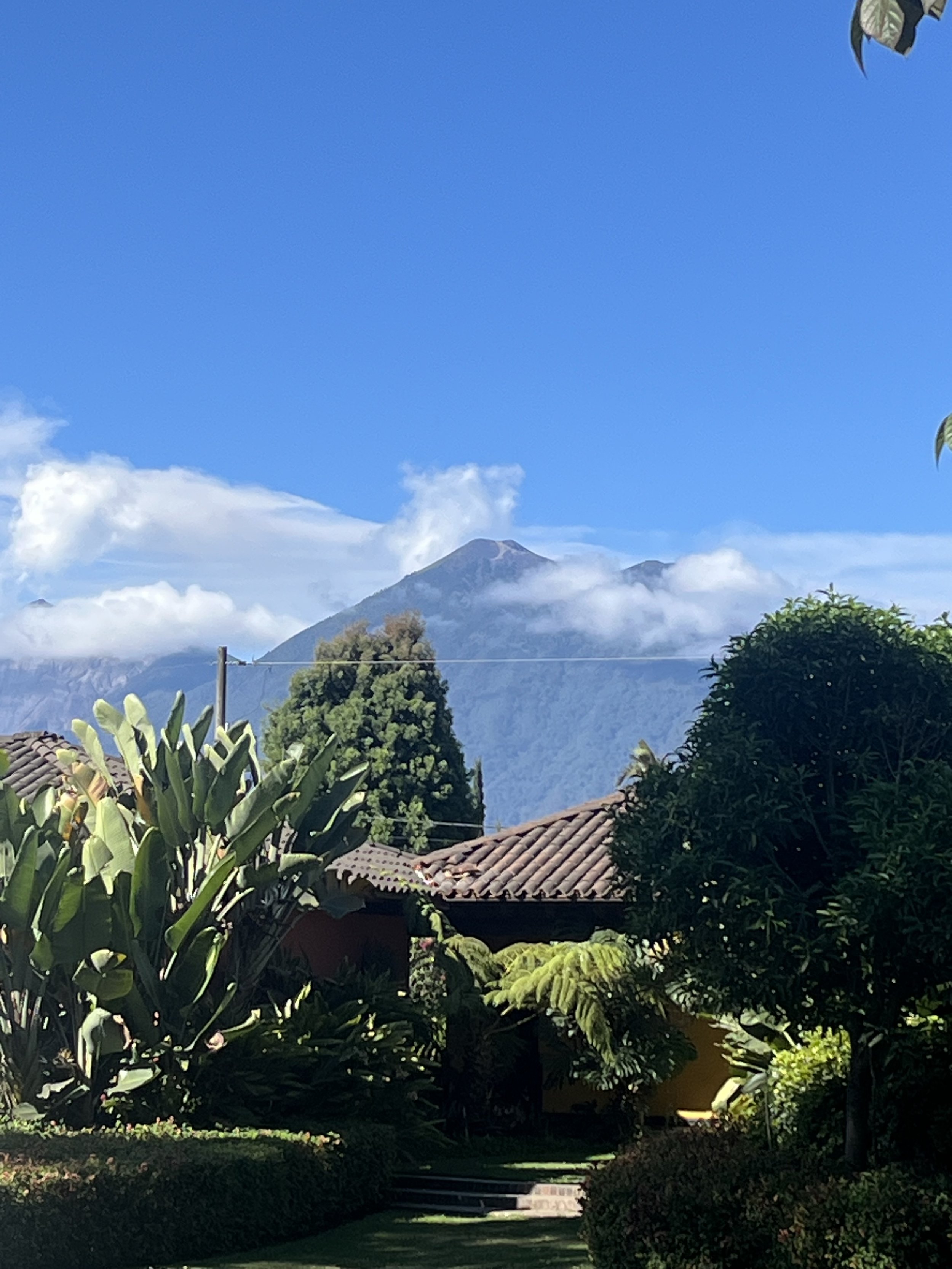
We arrived in Guatemala city, cleared our immigration and headed to the UNESCO, World Heritage city of Antigua, which sits at 5,000 feet above sea level, surrounded by three of the most gorgeous volcanoes, two of which are currently active.
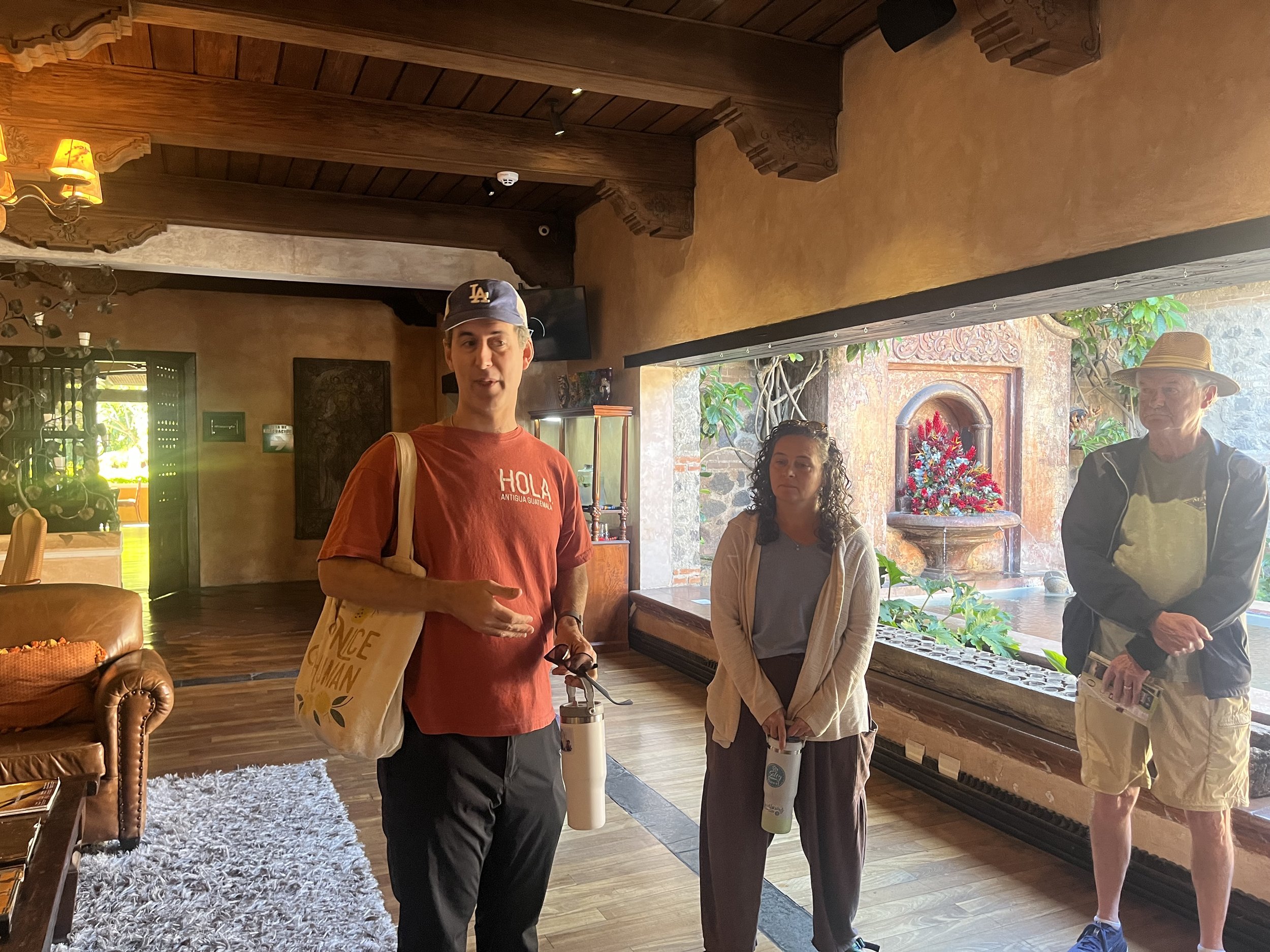
David and Bethany Boran (Micah members) are our amazing guides. On our first full day we headed out for a walking tour of the city with David as our historian. One of the things we noticed right away is that many of the local Guatemalans are not very tall. Some of that is due to malnutrition in the more indigenous communities, and the fact that so many live at high altitude which naturally lends itself to shorter stature. Or so we were told. Rabbi Flip is feeling very tall and enjoying that. The city itself is entirely composed of cobblestone streets, with very narrow sidewalks and planters that extend out so one must be very aware of where they are stepping and where they are walking. I think it’s not a matter of when we will fall, but how many times each day!
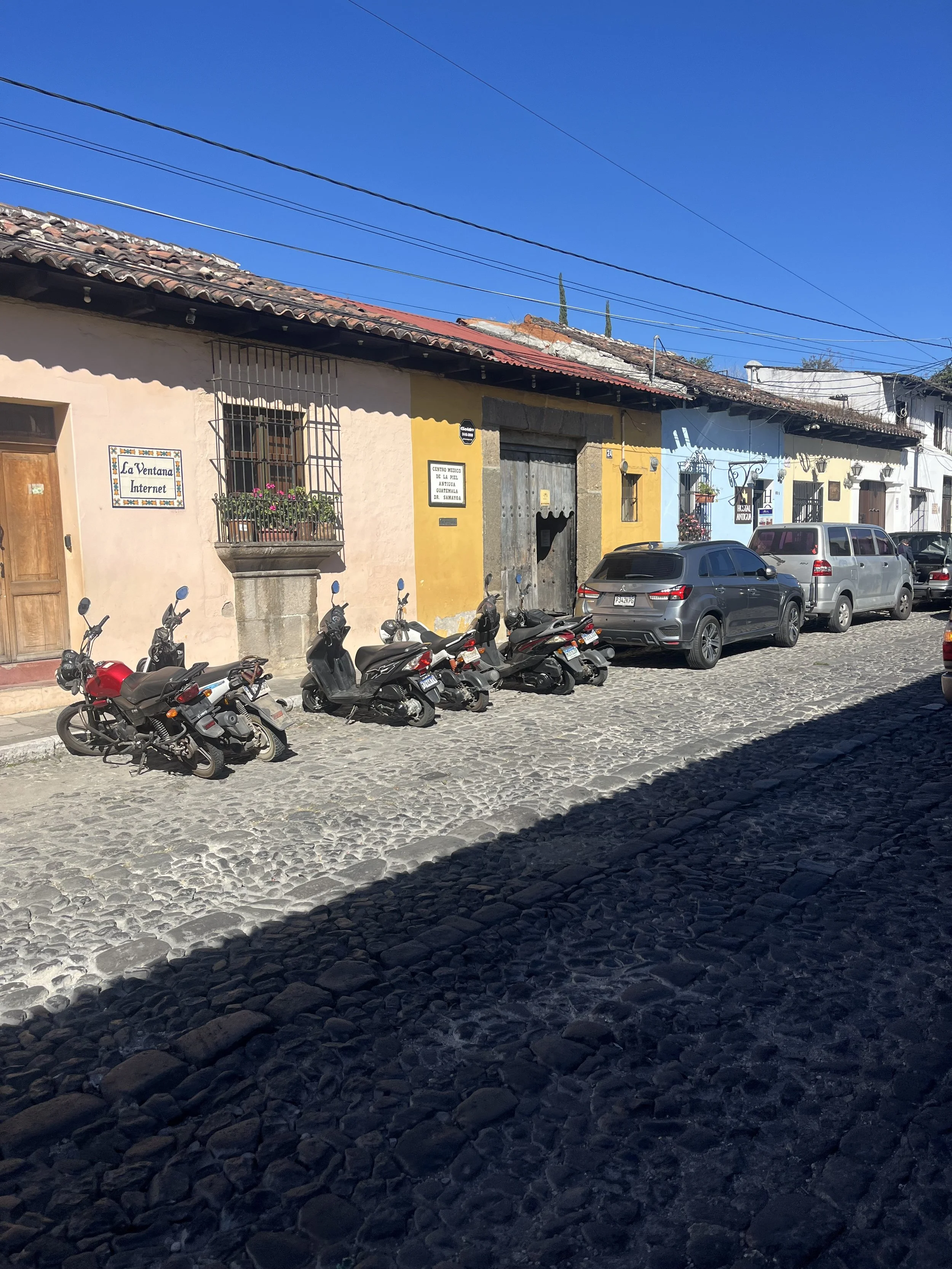
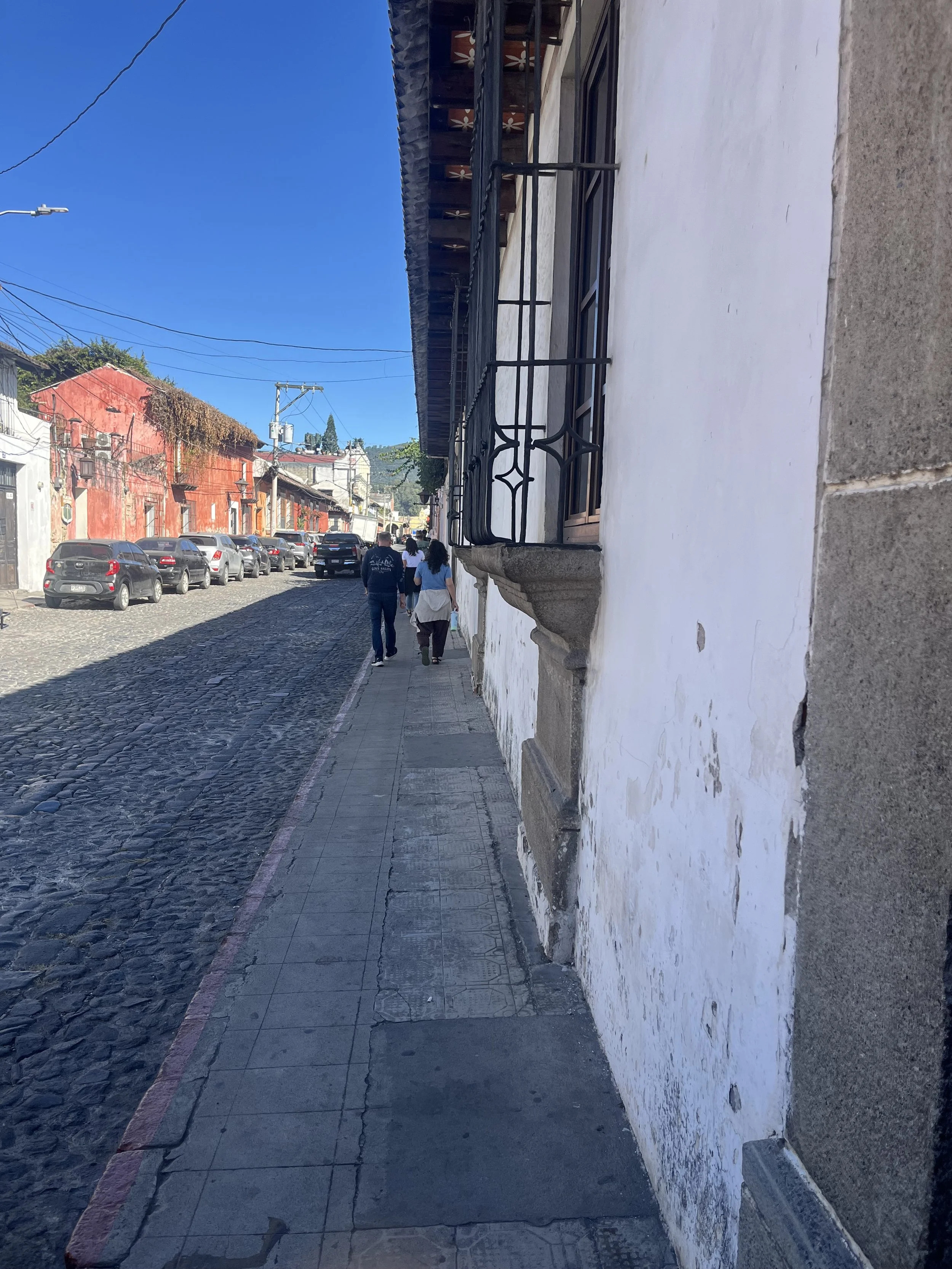
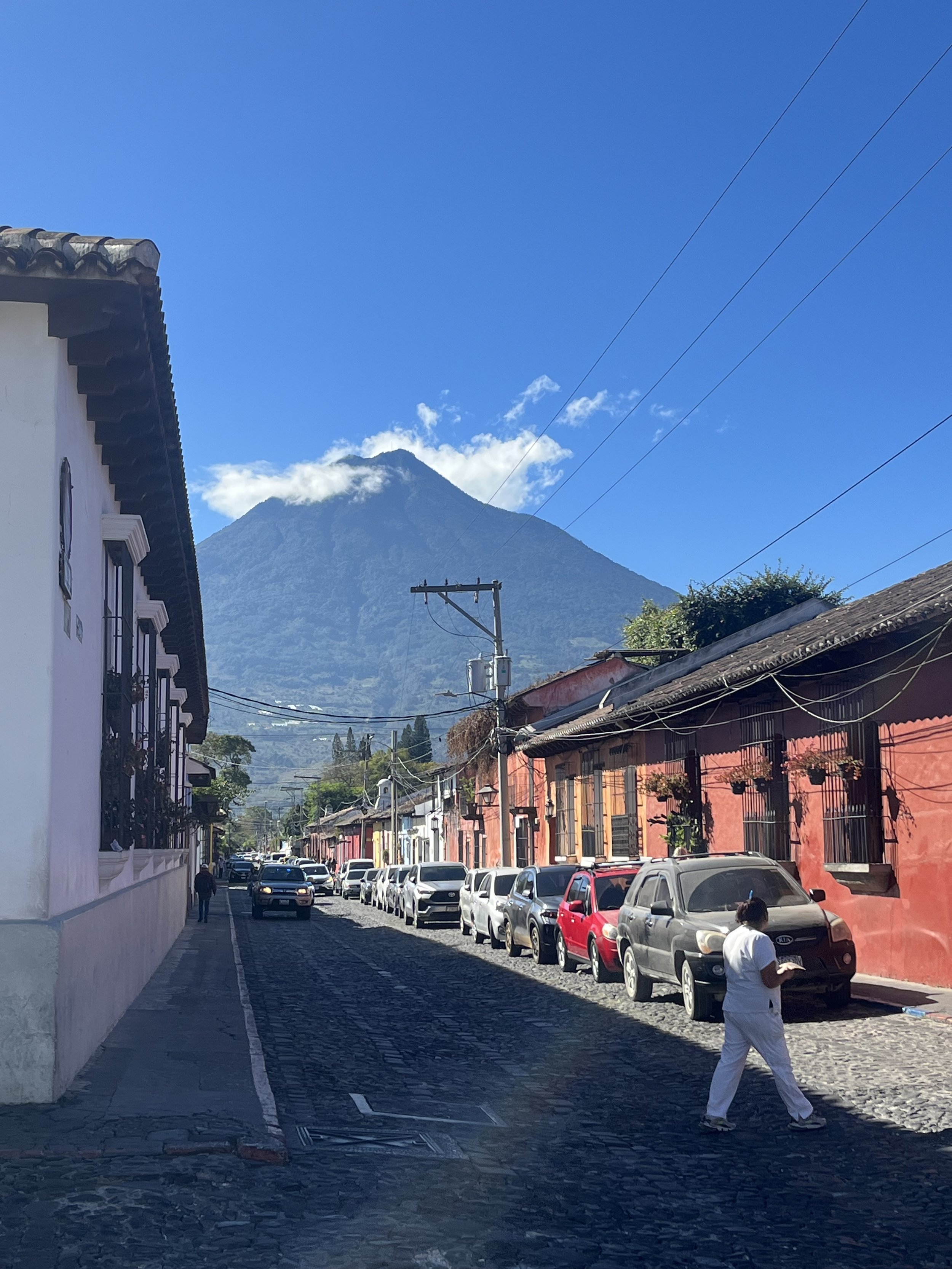
And it’s easy to note your direction by where the volcanoes are located.
And by the Park Central, if you stand still and listen, the sounds are a buffet of noises - an orchestra of bird calls, the water of the main fountain, an old man playing a lute, and tourists walking and shopping.
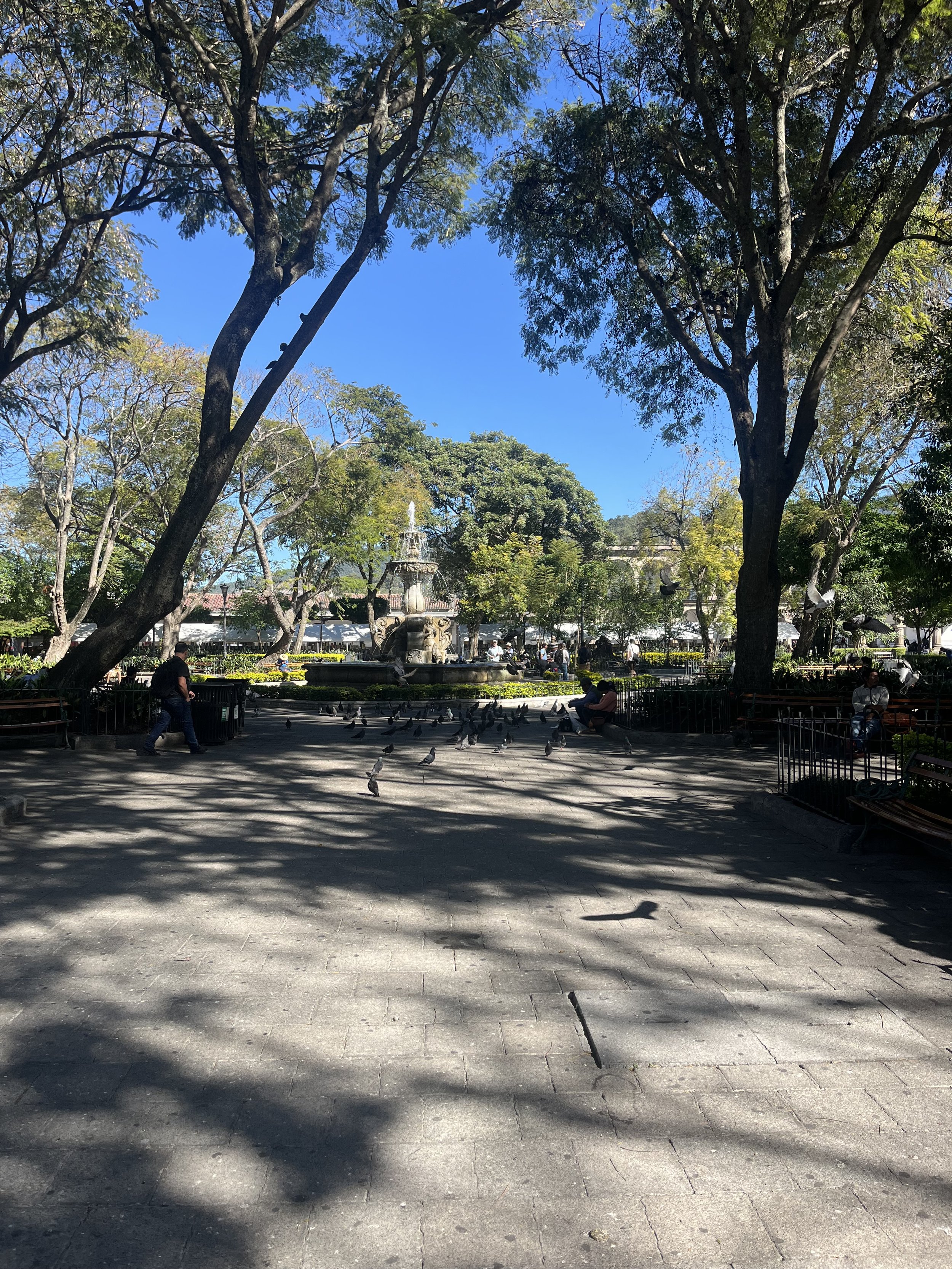
Antigua is a grid city. Avenidas and calles… like streets and avenues in Manhattan. Antigua means antique… it is the old Guatemalan capital, the colonial capital. Several Catholic monasteries in Antigua were established when the city was established in the 1500s. Indigenous villagers were taken from the surrounding villages and as far north as Mexico City to build the city for the Spaniards. The Catholic monasteries often supported this practice. In 1773, Guatemala City became the new capital and Antigua was largely abandoned. But coffee became a popular crop in the 1830s and Antigua boomed once again.
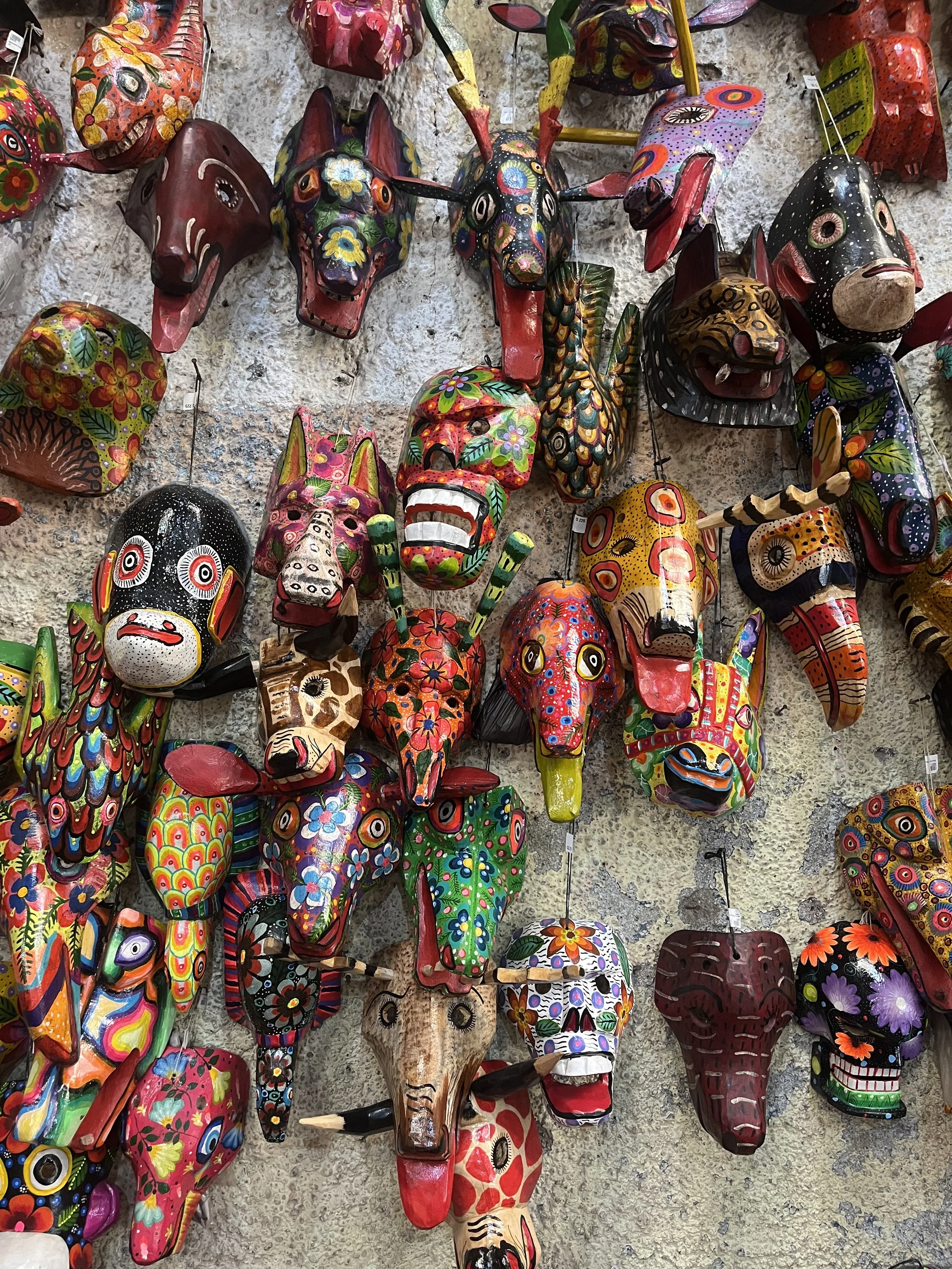
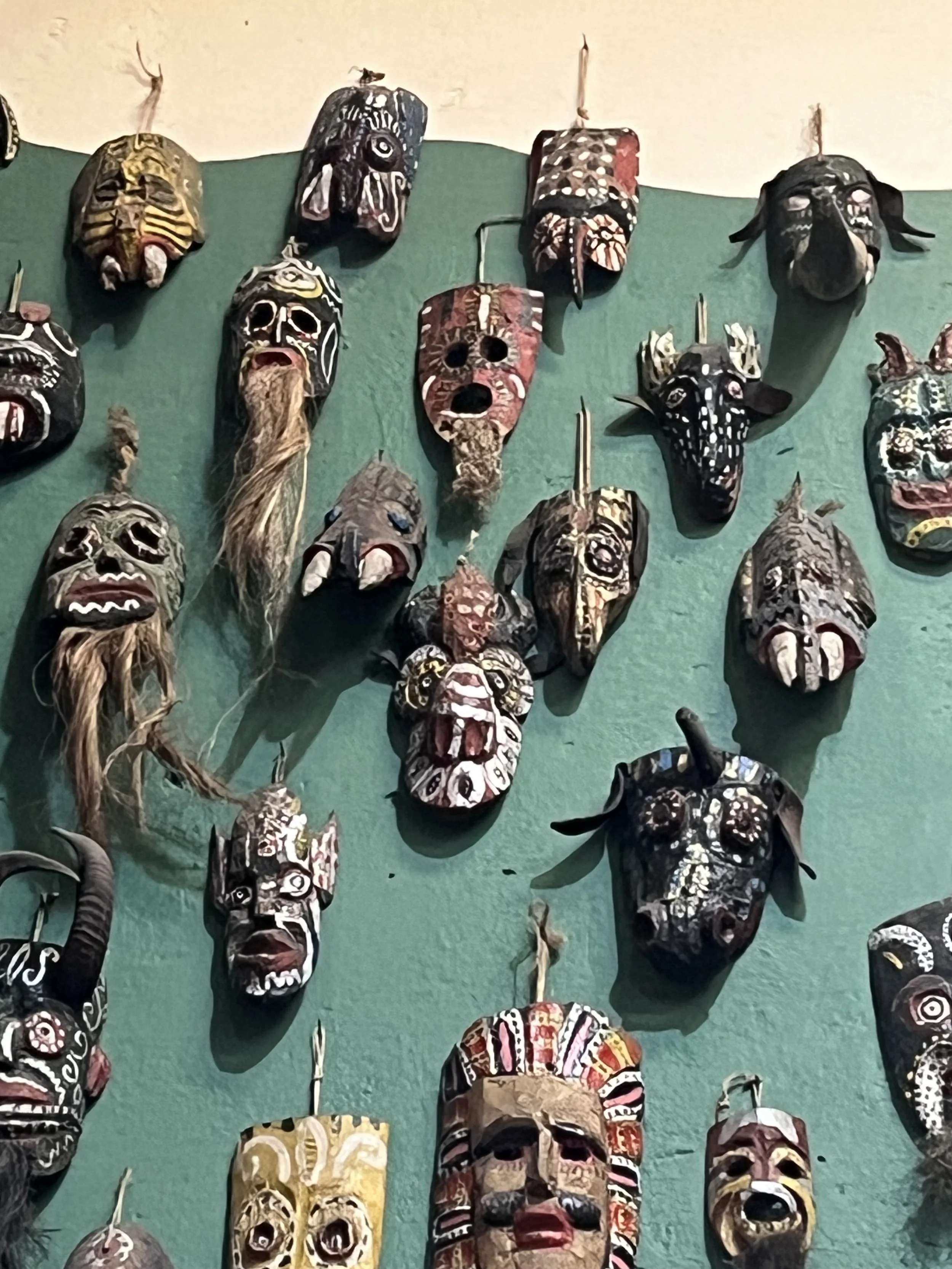
Masks are everywhere in Guatemalan art. We see them on walls in shops, in the hotel and around the city. Masks are part of the Mayan culture and indicative of spirit animals. They were worn during certain festivals and celebrations and are representative of the indigenous people.
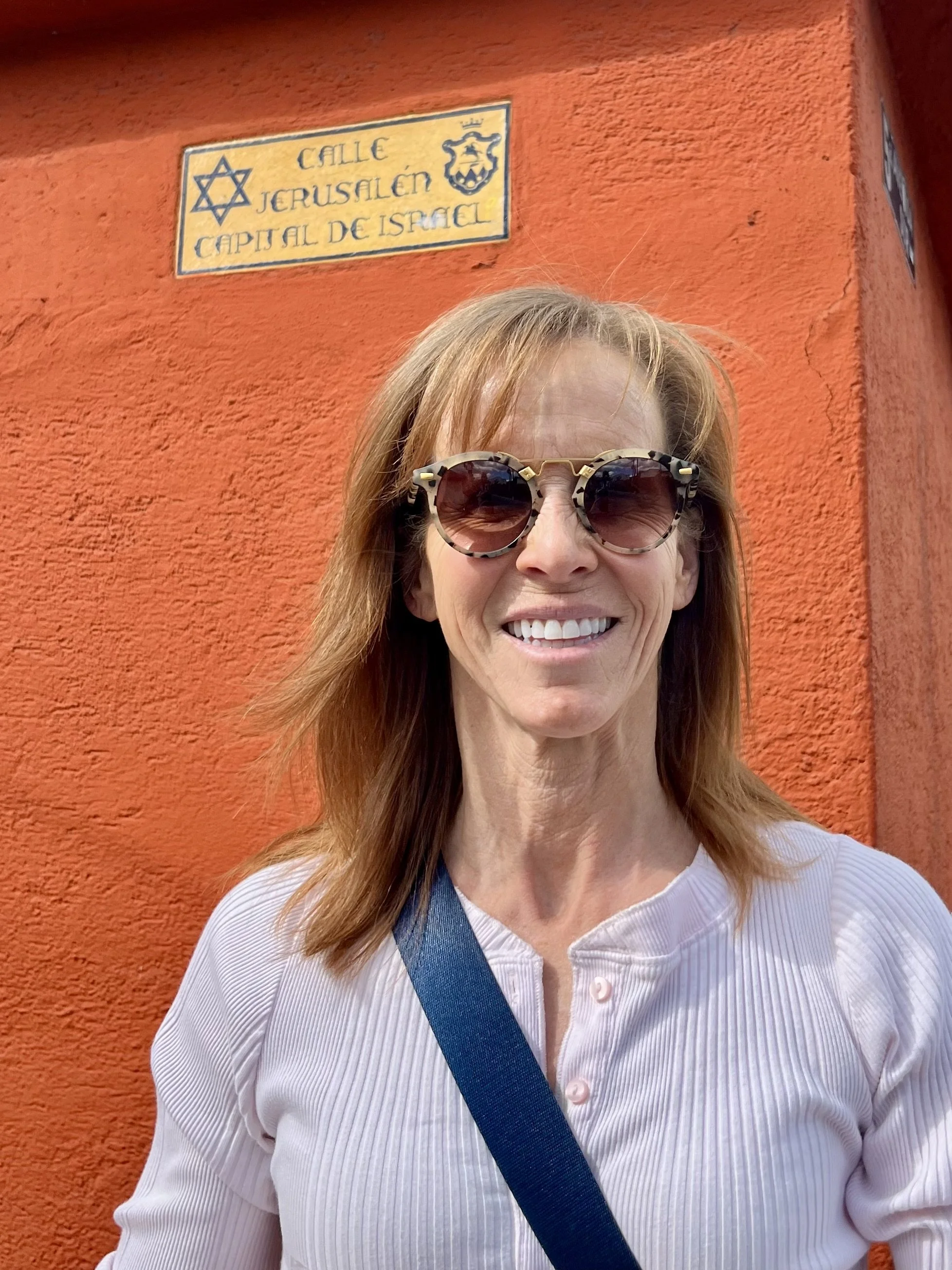
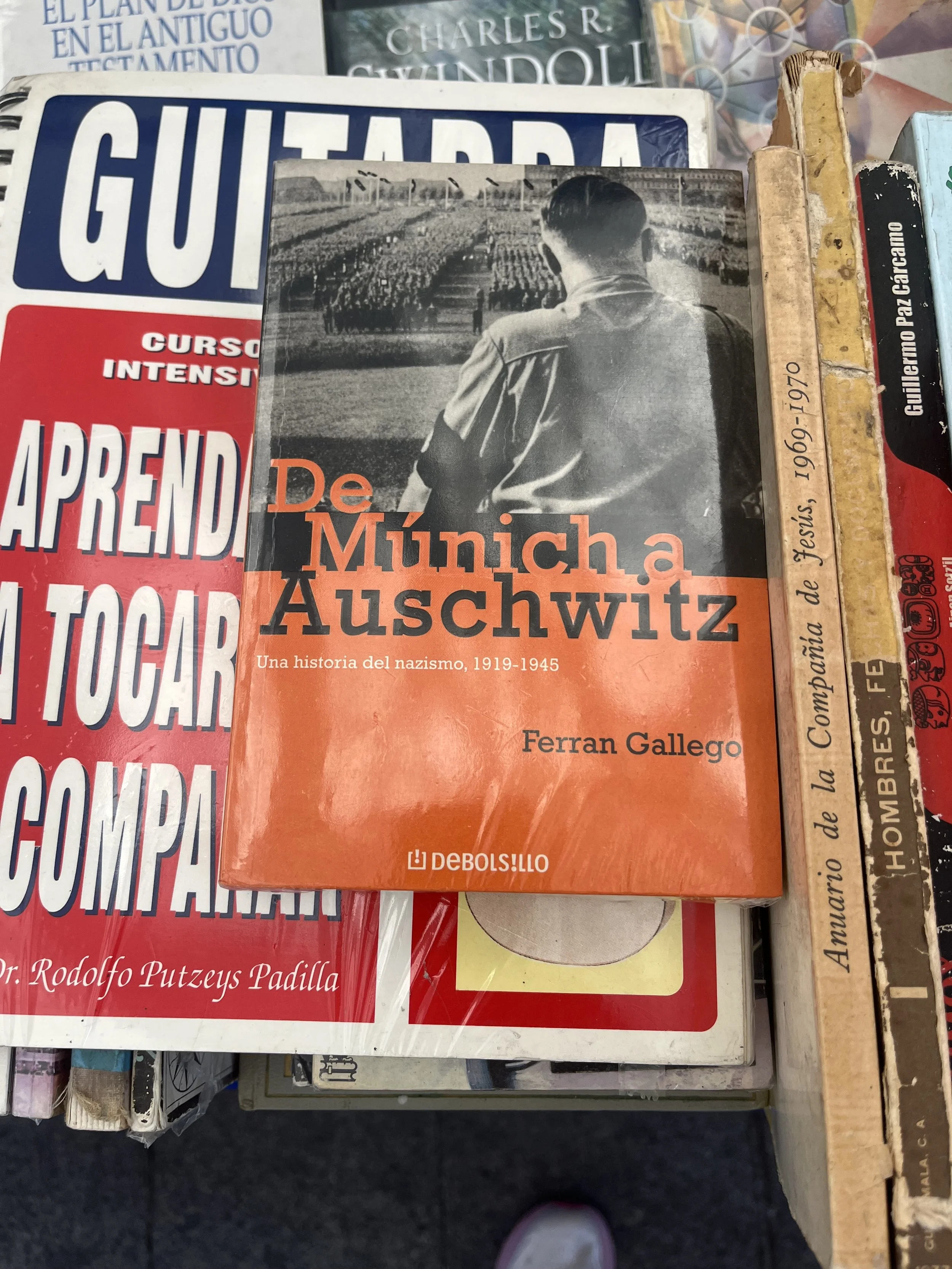
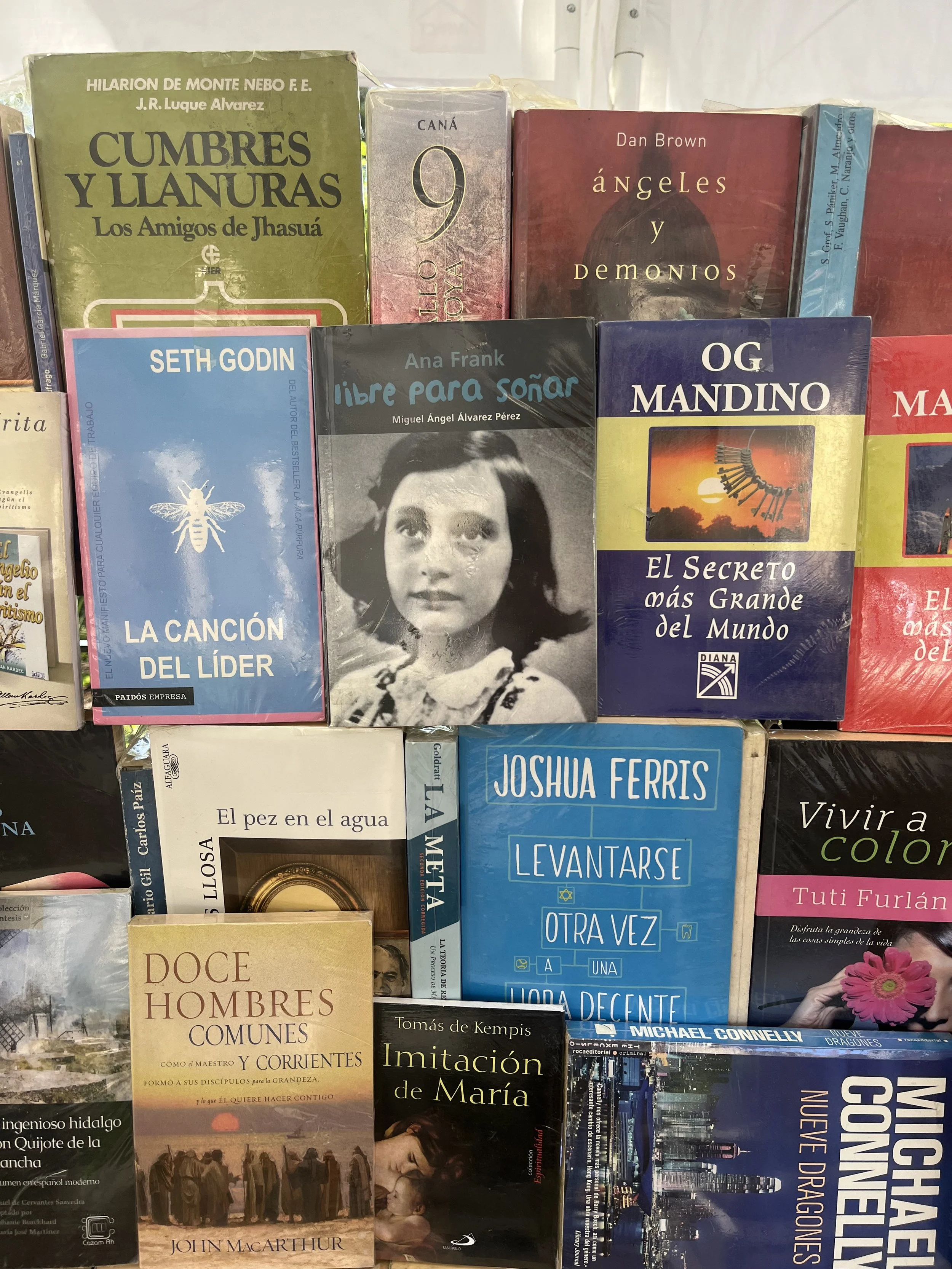
Lots of Israelis can be found traveling around Guatemala. And Jews. Jews from all over. Today we met Orthodox Jews from Los Angeles and Maryland. Guatemala as a country has consistently supported Israel more than most other nations. And despite there not being an active Jewish community that is indigenous, I still see many images that indicate interest in Jewish life and history. Apparently when Jews were expelled from Spain, many came to Guatemala City and have remained. It was a haven for Jewish Spaniards.
Tomorrow we journey up the Agua Volcano to begin meeting some of the farmers and farm communities surrounding Antigua. Hasta manana… until tomorrow!