
On my morning run along the coastline from Tel Aviv to Netanya, I passed a sign that felt especially poignant in the wake of our recent Israeli and American elections:
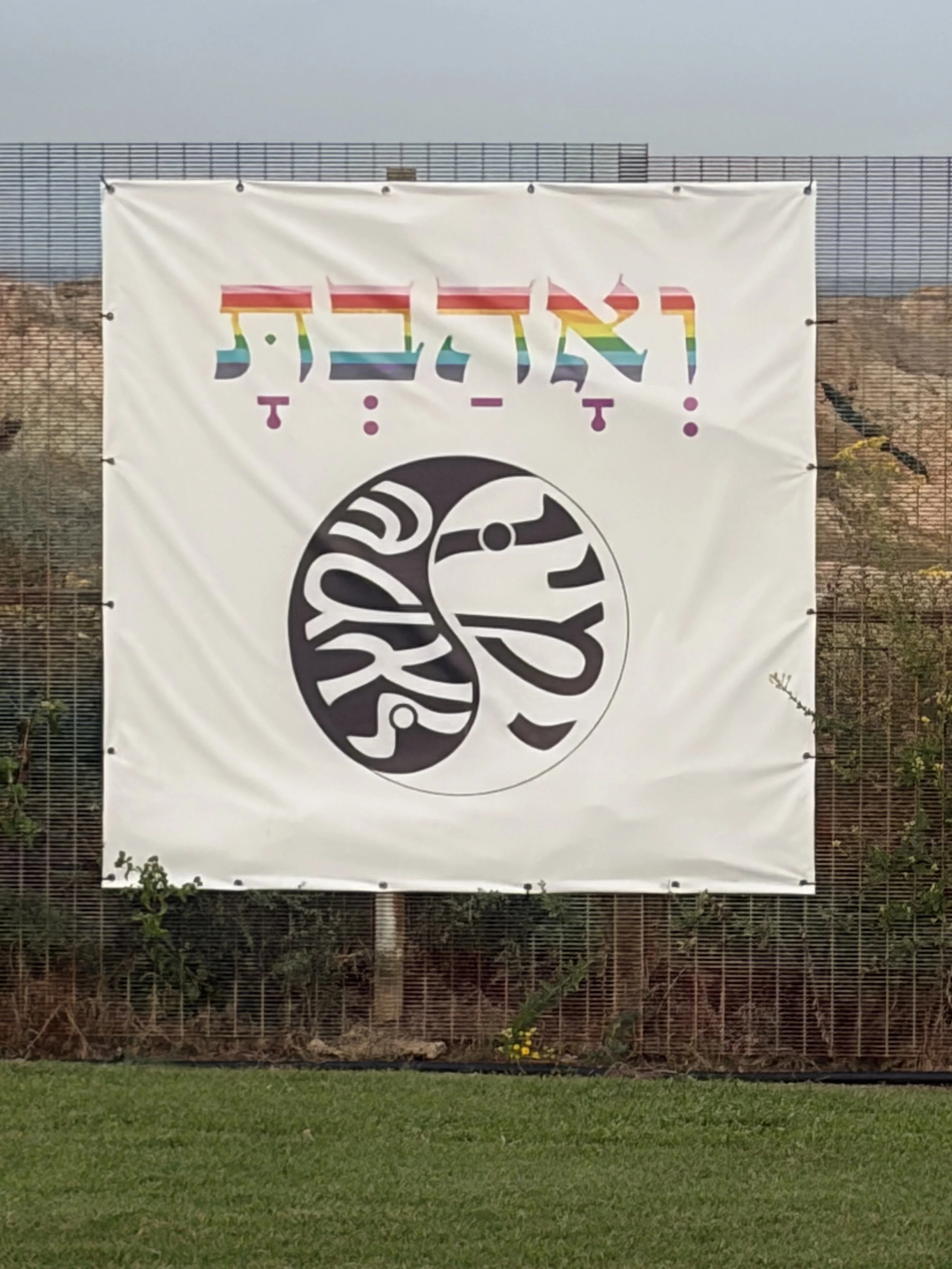
V’ahavta… “And you shall love.” Those words, written in Hebrew, are followed by the symbols for right and left—a visual play on the yin and yang of our differences.
It struck me as a beautiful and timely reminder: Whatever side of the political, ideological, or cultural divide we find ourselves on, the mandate to love must transcend all of it. Right and left are not meant to be forces that cancel one another out, but perspectives that can coexist, balance, and even complement one another. Our differences need not divide us or distance us from each other. Above all else, we are commanded to love.
As we make our way out of Tel Aviv, we pass the ancient port city of Jaffa, a place with a very different feel from its bustling neighbor. Historically home to a predominantly Arab population, Jaffa has increasingly become an enclave for artists, galleries, cafés, and new development. That transformation has brought a wave of gentrification, not without tension or frustration among longtime residents who have watched their neighborhood change around them.
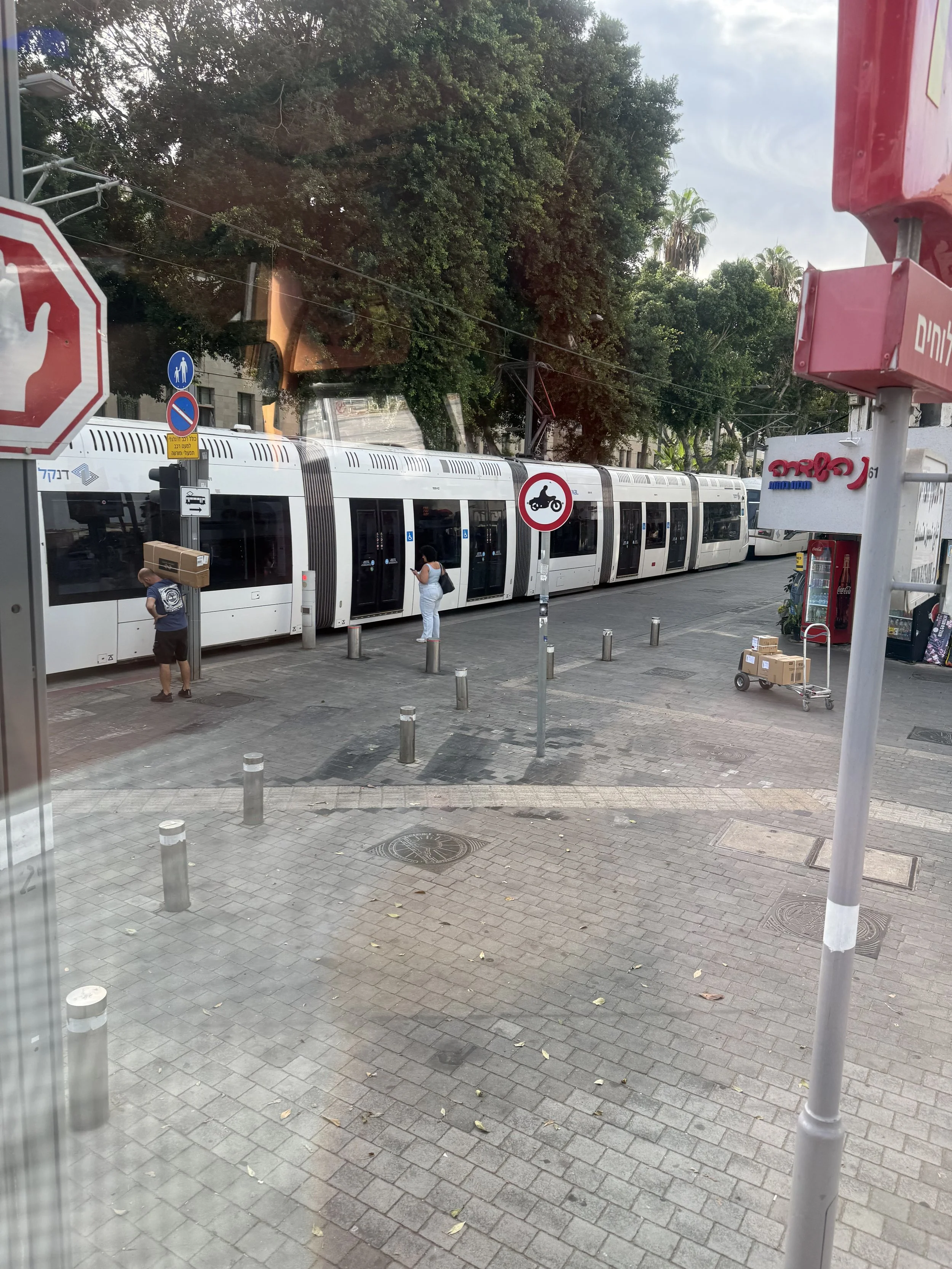
And then, almost as a visual punctuation mark, we catch a glimpse of Tel Aviv’s new light rail system—a sleek, modern addition moving through a city whose streets still pulse with the energy, history, and beautiful chaos of everyday life. It is a fitting image of Israel itself: old and new, tradition and innovation, all sharing the same landscape.
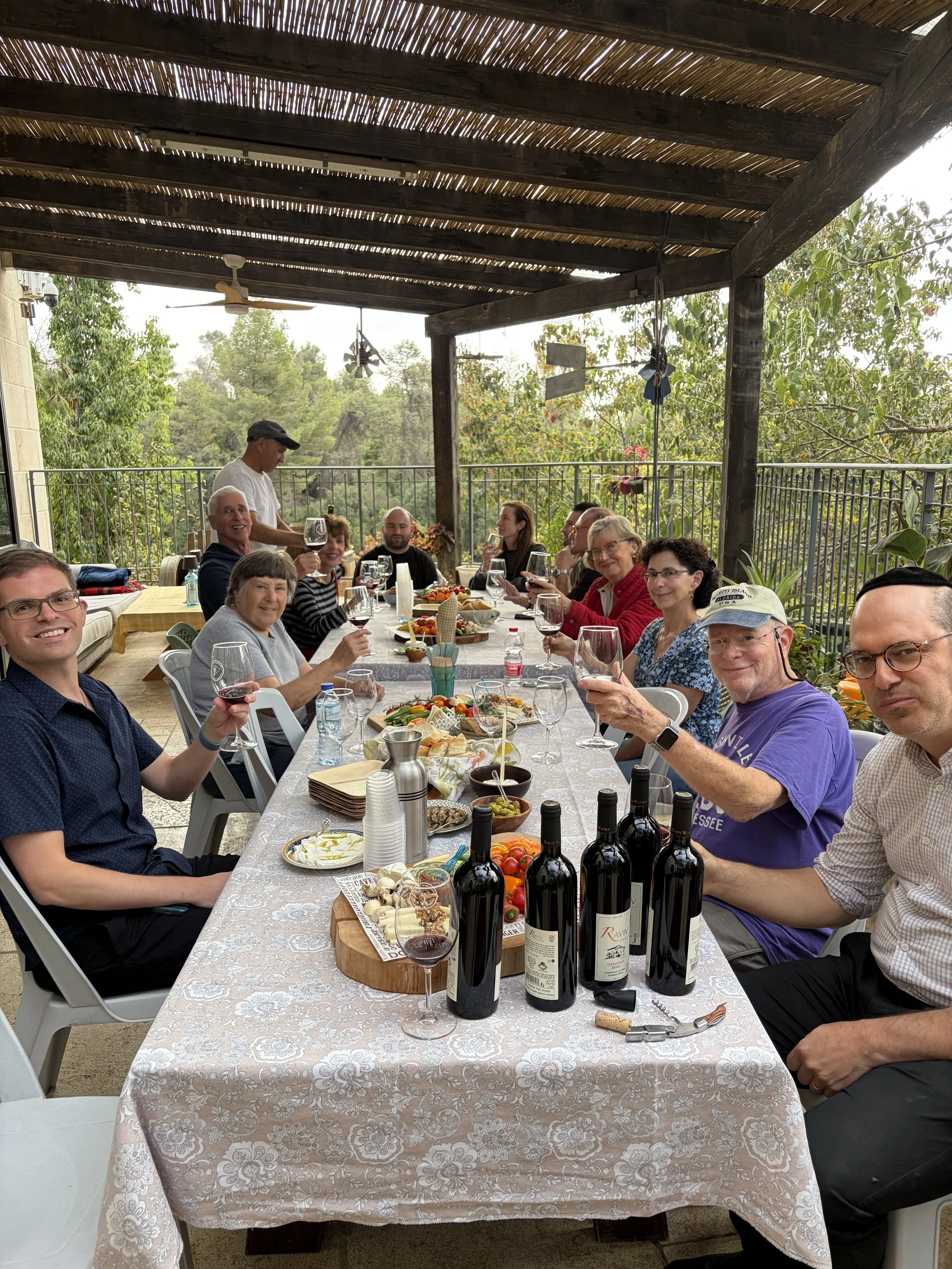
There is something wonderfully Israeli about leaving Tel Aviv before 9:00 in the morning and heading to a winery for a wine tasting. After all, why wait until the afternoon? Our destination is the Raviv Winery in Nes Harim, and the journey south offers a fascinating glimpse of the many layers of this country.
Nes Harim itself has a wonderful history. It was established in 1950 by immigrants who came to Israel from Kurdistan, building an agricultural community rooted in the land. In those early years, the residents made their living primarily by growing fruit trees and raising chickens. Today, the community reflects a broad spectrum of religious observance, another reminder of the diversity that exists within Israeli society.
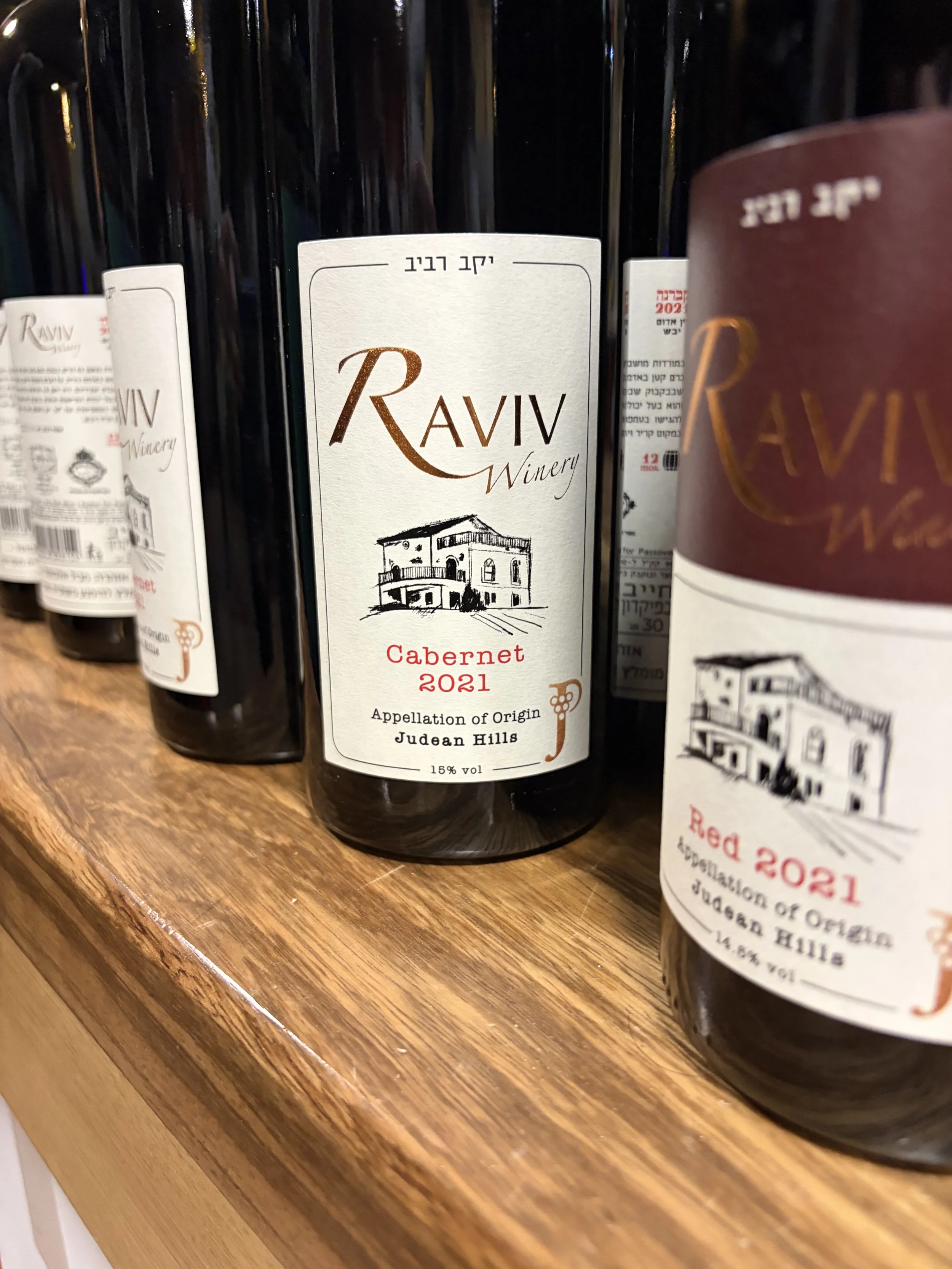
Our visit to the Raviv Winery introduces us to a newer chapter in the area's agricultural story. The vineyard was planted in 2010, with varieties including Syrah (Shiraz), Cabernet Sauvignon, Merlot, and Petit Verdot. The winery is intentionally small, producing approximately 5,000 to 6,000 bottles each year.
We are in the Judean Hills, Israel's first officially recognized wine appellation. To qualify as a wine from this region, more than 80 percent of the grapes must be grown here. It's a lovely example of how a community with deep agricultural roots continues to find new ways to cultivate the land—this time, one bottle of wine at a time. Is there a better way?
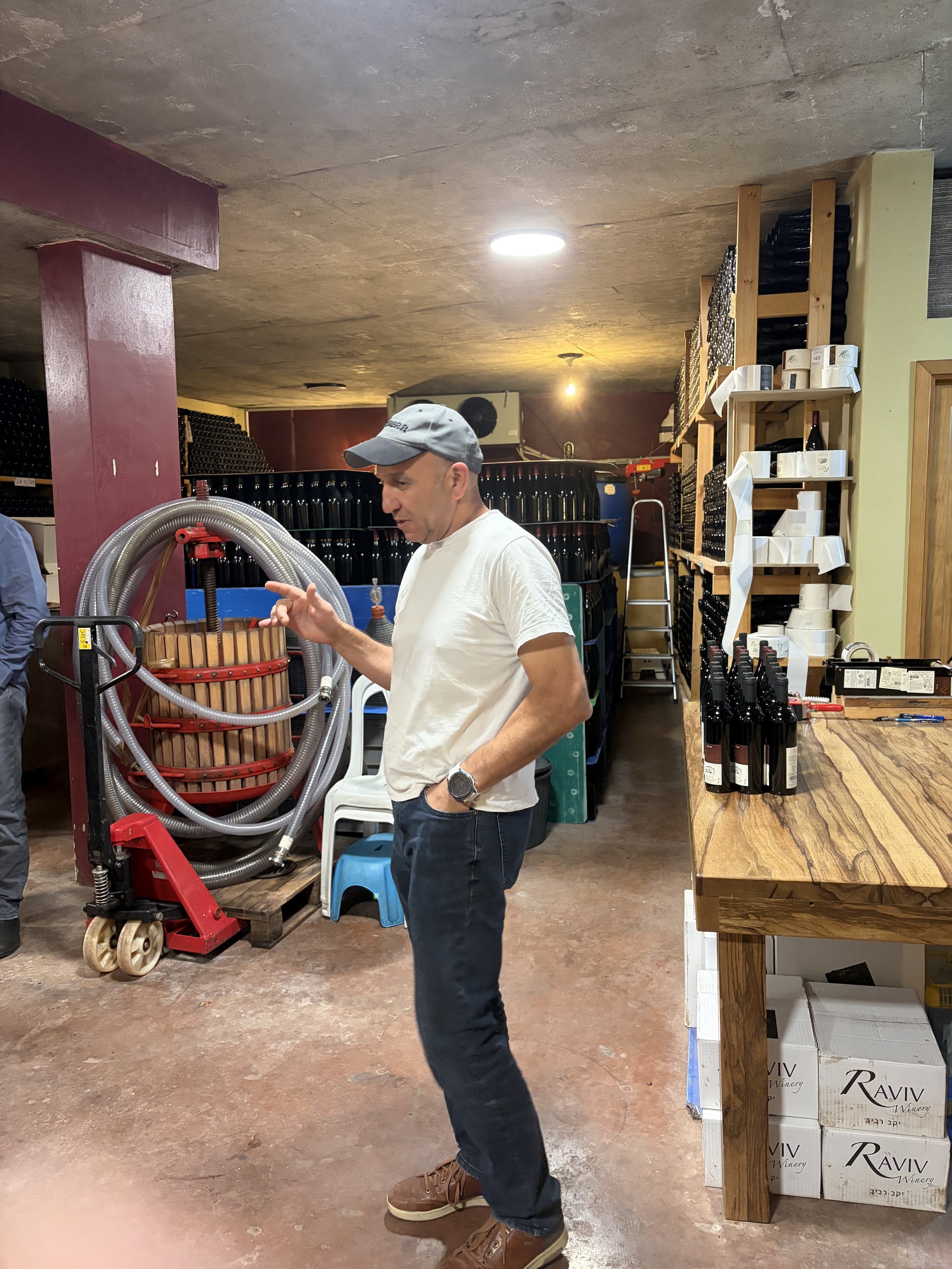
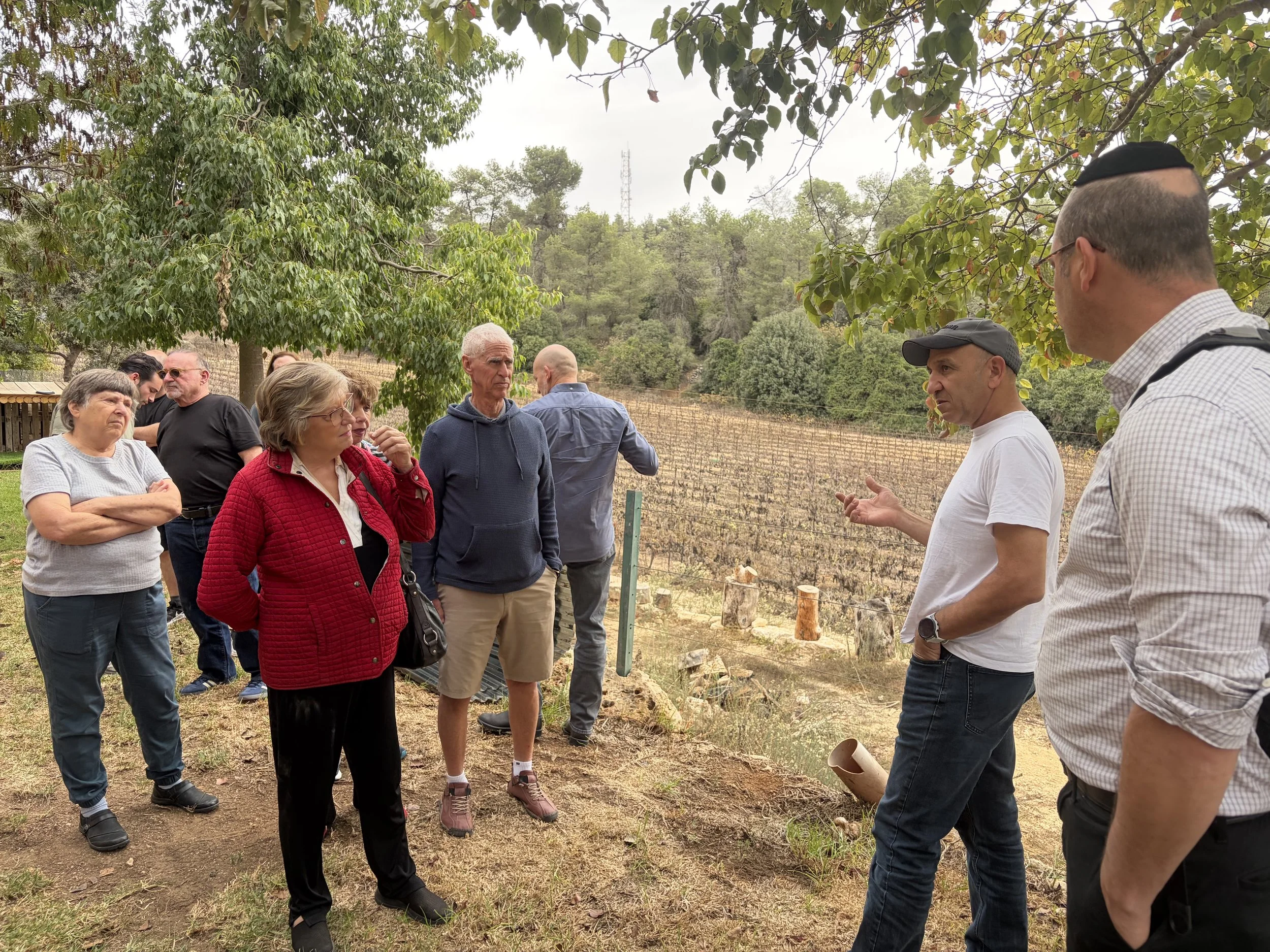
One of the most thought-provoking conversations of our day was with a senior Israeli military officer who spoke with remarkable candor about the challenges facing Israel. Because of his position, we are keeping his identity anonymous, but his perspective offered a fascinating glimpse into the complexities of Israel's current reality.
He began by distinguishing between the external threats Israel faces and the internal challenges that may ultimately prove even more difficult to overcome. The external threats, he suggested, are something Israel knows how to confront. Iran, Hezbollah, Hamas, and the other terrorist organizations surrounding Israel represent serious dangers, but Israel has extraordinary intelligence, technology, and military capabilities. The internal divisions within Israeli society, however, are much harder to solve.
Reflecting on October 7, he described it as a catastrophic failure of Israel's security assumptions. For years, Israel believed it could contain Hamas, rely on intelligence to anticipate an attack, and trust its technological superiority to protect its borders. October 7 shattered that confidence. He rejected conspiracy theories about internal betrayal, instead acknowledging the complacency and institutional failures that made the massacre possible.
He also spoke about the extraordinary response of Israeli society afterward: the soldiers who mobilized, the volunteers who stepped forward, and the remarkable resilience of a nation under attack. Yet he cautioned against confusing military success with strategic victory. Israel has significantly weakened Hamas and Hezbollah, demonstrated extraordinary military capabilities against Iran, and changed the regional balance of power. But Hamas still exists, Hezbollah is still rebuilding, and Iran's ambitions remain. Military strength alone cannot resolve these conflicts. Without a clear political and diplomatic strategy for what comes next, Israel risks finding itself in an endless cycle of war.
Perhaps his most passionate comments concerned Israel's standing in the international community. He acknowledged that Israel is doing a terrible job communicating its position to the world and has, in many ways, abandoned the effort. Too often, he argued, Israeli leaders dismiss criticism as antisemitism rather than engaging with it. While he believes much of the international narrative about the war is disconnected from reality, he also recognizes that Israel cannot simply declare that it will stand alone.
He spoke emotionally about the humanitarian situation in Gaza, describing the extensive Israeli military and civilian efforts to facilitate food, shelter, fuel, and other humanitarian assistance, even while fighting Hamas. He emphasized that Palestinian civilians are not Israel's enemy and that the suffering of innocent people is deeply troubling. He challenged those who describe themselves as pro-Palestinian to consider whether their actions actually improve Palestinian lives. In his view, supporting Hamas only perpetuates the suffering of Palestinians. The real opportunity lies in strengthening moderate Palestinian leadership and supporting those willing to envision a future alongside Israel rather than in place of Israel.
He was equally candid about Israel's own political leadership. He criticized the government's failure to articulate a realistic vision for the future, its willingness to allow extremist voices to define Israel's public image, and its reluctance to address the Palestinian question. He believes that even Israelis who want peace are understandably far more cautious after October 7. But caution cannot become an excuse for avoiding difficult conversations or indefinitely postponing the possibility of a different future.
And then he turned to what he considers perhaps Israel's greatest long-term internal threat: the growing division within Israeli society, particularly the relationship between the ultra-Orthodox (Haredi) community and the rest of the country. He warned that the growing population of Haredi Israelis, combined with limited participation in military service and the workforce, creates an increasingly unsustainable burden on the country. But he also argued that confrontation and coercion will not solve the problem. Israel needs to find ways to bring communities together, create incentives for participation, and restore a sense of shared responsibility.
He ended with a warning that I found particularly powerful. Israelis sometimes speak as though their country is invincible, as though its military strength, technological innovation, and historical connection to the land guarantee its future. But history teaches otherwise. Jewish sovereignty is not guaranteed forever. Israel's future depends not simply on the strength of its military, but on the resilience of its society, the wisdom of its leadership, and its ability to maintain meaningful relationships with the rest of the world.
And yet, despite his sobering assessment, he ended on a note of optimism. He sees extraordinary opportunities for the Middle East, particularly in the relationships Israel has developed with countries like the United Arab Emirates, Jordan, Egypt, and potentially Saudi Arabia. He believes there are people throughout the region who want the same things Israelis want: security, prosperity, opportunity, and a future for their children. The challenge is finding a way to move beyond the extremists who are committed to perpetual conflict.
His message was ultimately one of both warning and hope: Israel has extraordinary strengths, but it cannot rely on military power alone. Its future will depend on its ability to look honestly at its own failures, change course when necessary, engage the world rather than retreat from it, and remember that its greatest source of strength has always been the resilience and unity of its people.
Our final stop of the day is the Museum of Tolerance in Jerusalem, a museum and educational center dedicated to confronting antisemitism, racism, and prejudice while promoting understanding and respect among people of different backgrounds. Through history, personal stories, and interactive exhibits, the museum challenges visitors to consider how intolerance takes root, the consequences of hatred, and the responsibility each of us has to build a more compassionate and respectful society. After a day spent reflecting on Israel's internal divisions, external challenges, and uncertain future, it is a fitting place to end—with a reminder that the work of building a better future begins with how we see and treat one another.
Tomorrow... The Old City, Machane Yehuda (the outdoor market before Shabbat), and then... SHABBAT!