
Day Two: The Stories We Have an Obligation to Tell
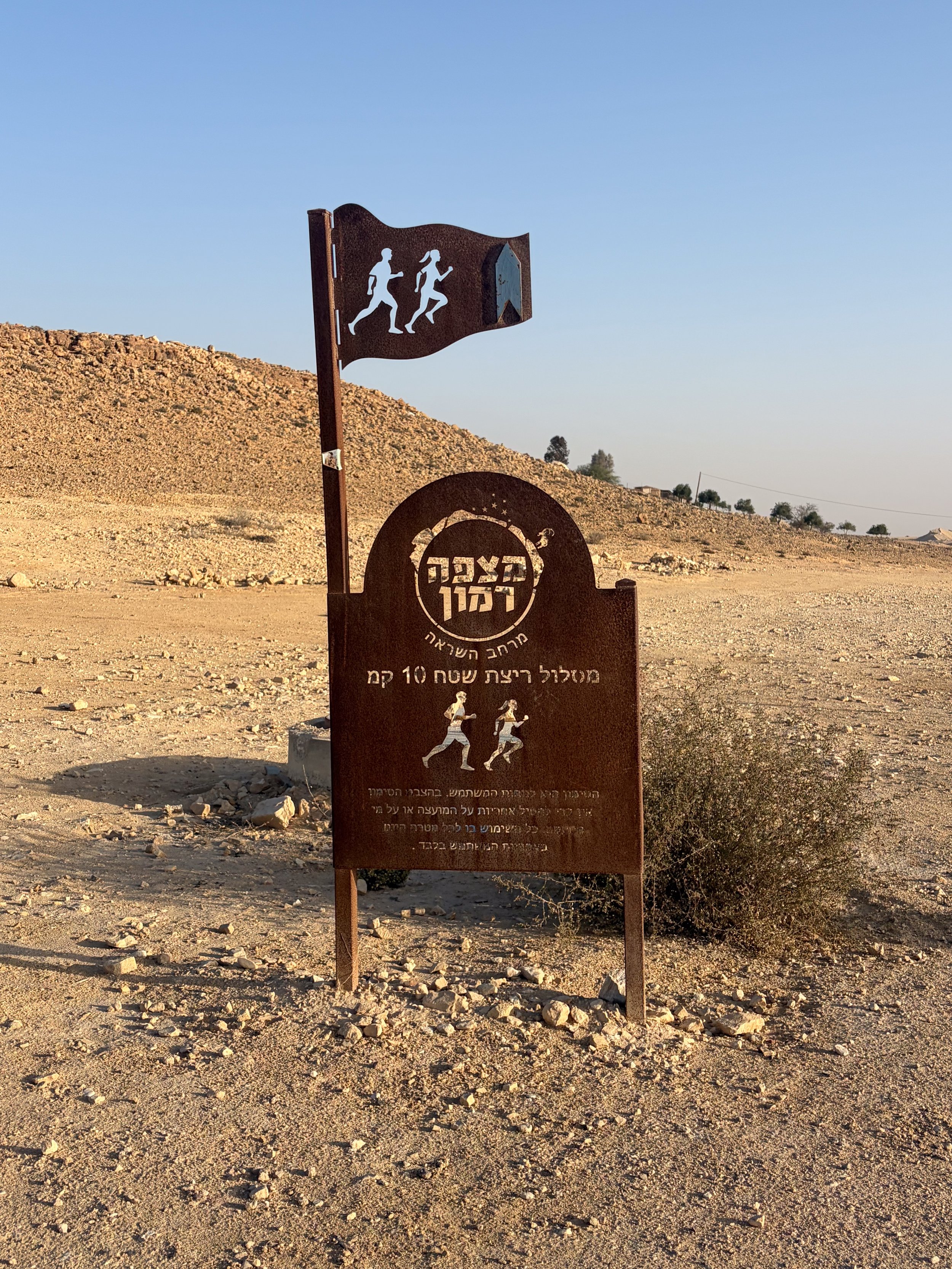
My day began with one of the most glorious runs I can remember. I ran alongside the magnificent Makhtesh Ramon crater, following a JNF dirt road through the Negev. I was completely alone, watching the sun rise over the desert, surrounded by a kind of quiet that is almost impossible to describe. There are moments when you realize you're experiencing something truly extraordinary, and this was one of them.
I had no idea how dramatically that quiet would contrast with what the day had in store.
We were heading to the Gaza Envelope (the communities surrounding Gaza) to meet Koby Levy, a 25-year-old Israeli soldier who survived one of the most horrific battles of October 7 at the Nahal Oz military base.
Koby was a combat medic serving with an armored corps unit stationed at the base. He had been there since July 2023, and October 7 was supposed to be his last Shabbat on base before beginning his final month of military service. His parents had actually boarded a flight from Tel Aviv to New York the night before. They had no idea what was about to happen to their son.
At 6:29 a.m. on October 7, Koby awoke to what he initially thought was an earthquake. It was the sound of rockets. Within minutes, the base was being bombarded. He and his fellow soldiers rushed to a bomb shelter, and two tanks from his platoon headed toward the border to investigate what was happening.
At first, they thought they were responding to another round of rocket fire. They had no idea that Hamas terrorists had already infiltrated the base.
Then came the gunfire. Koby recognized the sound of automatic weapons and realized that what they were hearing wasn't coming from Israeli soldiers. Communications were lost. The base was being overrun.
A friend managed to get a brief phone connection and told them that the base commander had been critically wounded, soldiers had been killed, and dozens of terrorists had entered the base.
What followed was four hours of unimaginable fighting. Koby and the other soldiers were trapped in a bomb shelter, defending themselves against terrorists just feet away. They were being fired upon with rifles, grenades, and RPGs. As a medic, Koby was trying to save the lives of wounded soldiers while simultaneously fighting for his own.
At one point, he managed to call his mother. His parents were on their way to New York, completely unaware of the unfolding catastrophe. Koby knew that this might be the last time he would ever speak to her. He told her he loved her and that he would do everything he could to get out alive, although he wasn't sure he would.
At approximately 11 a.m., a grenade exploded inside their shelter. Koby was badly injured. His weapon was disabled, and as he emerged from the shelter, he saw a tank from his own platoon engulfed in flames. He found his close friend Yoni lying on the ground. Yoni was dead.
Koby had no weapon, no phone, no radio, and no way to communicate with anyone. He eventually made his way into a bush on the base, where he remained hidden, completely alone, for five hours.
He told us that during those hours, he became convinced that the State of Israel was finished. He could hear fighting in the distance, but the base around him had gone silent. Having witnessed the number of terrorists who had overwhelmed the base, he couldn't imagine how Israel could survive an attack of this magnitude.
At approximately 4:30 that afternoon, Israeli soldiers finally reached him. He was rescued and eventually taken to the hospital.
Koby survived. Fifty-four Israeli soldiers did not. The Nahal Oz base was one of the sites of the largest military battles on October 7.
But what Koby said afterward was perhaps even more powerful than the details of his survival.
He spoke about the extraordinary courage of the soldiers who stepped into leadership roles when their commanders were killed or wounded. He told us about one commander, Shilo Ivan, who made the decision to lead his soldiers directly into the base to rescue their fellow soldiers. All seven members of that team were killed.
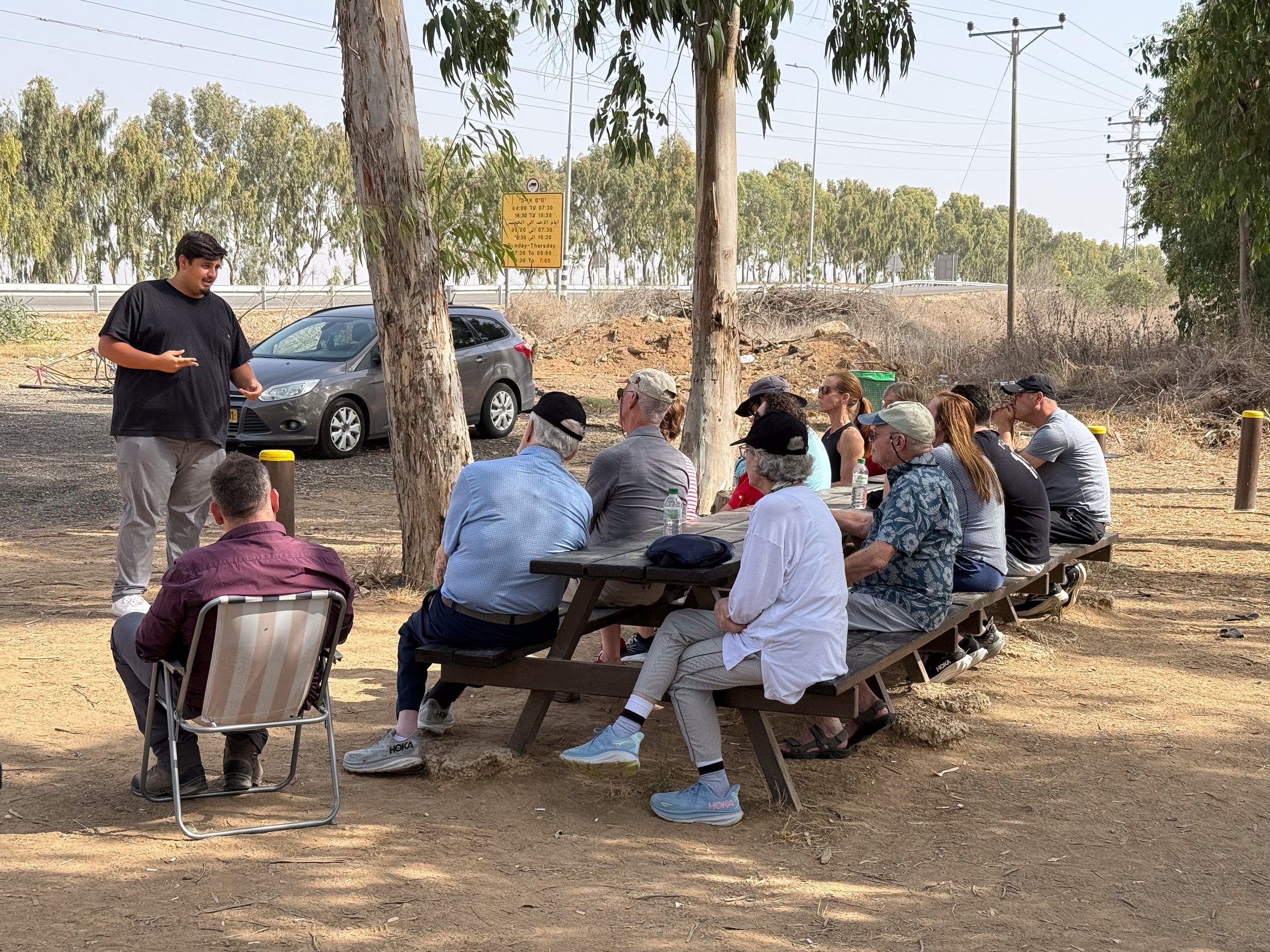
And then Koby said something that I think is important for all of us to understand: October 7 was a story of an enormous failure. The army failed in its fundamental responsibility to protect Israeli citizens. That truth cannot be erased or explained away. But it is also a story of extraordinary selflessness, courage, and people rising to do things they never imagined they would be called upon to do.
He spoke about his responsibility to tell these stories because so many of the people who should be telling them are no longer here. He wants their names remembered. He wants us to know who they were and what they did.
One thing he said particularly stayed with me. He explained that during the attack, the terrorists weren't shouting "Israelis." They were shouting "Jews." And that distinction matters. What happened on October 7 was not simply an attack on the State of Israel or its military. It was an attack on Jews.
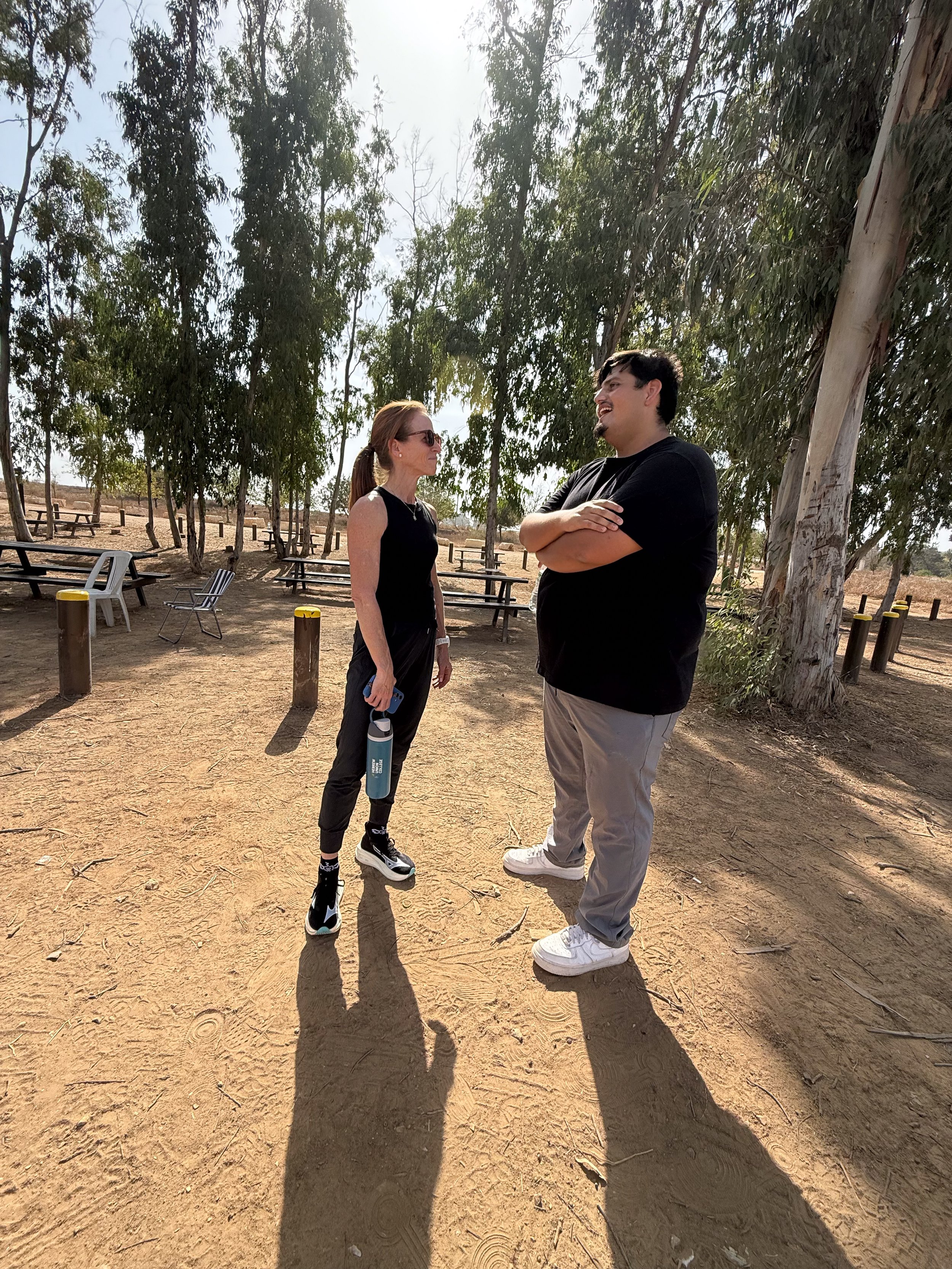
As a Jew living in America, I wanted to tell Koby how profoundly grateful we are. Many of us have visited Israel countless times, love this country, and feel deeply connected to it. But we didn't build it. We didn't fight for it. We didn't stand in that bomb shelter. And I wanted him to know that we understand, at least in some small way, what he and his friends did for all of us.
I also asked him whether telling his story helps him heal, particularly knowing what his parents experienced during those hours when they had no idea whether their son was alive or dead.
His answer was that sometimes telling the story is empowering, and sometimes it is painful. But ultimately, he feels obligated to do it. He said that while they may have lost the military battle that day, they won something else: the battle of remaining true to their values, of standing up for one another, and of preserving their humanity even in the face of unimaginable evil.
I don't think any of us left that conversation unchanged.
We then traveled a short distance to a memorial honoring the young female soldiers who served as surveillance observers at Nahal Oz. These young women were responsible for monitoring activity along the Gaza border. They were unarmed, and many had repeatedly raised concerns about what they were seeing and sensing in Gaza in the months leading up to October 7. Their warnings were not taken seriously enough.
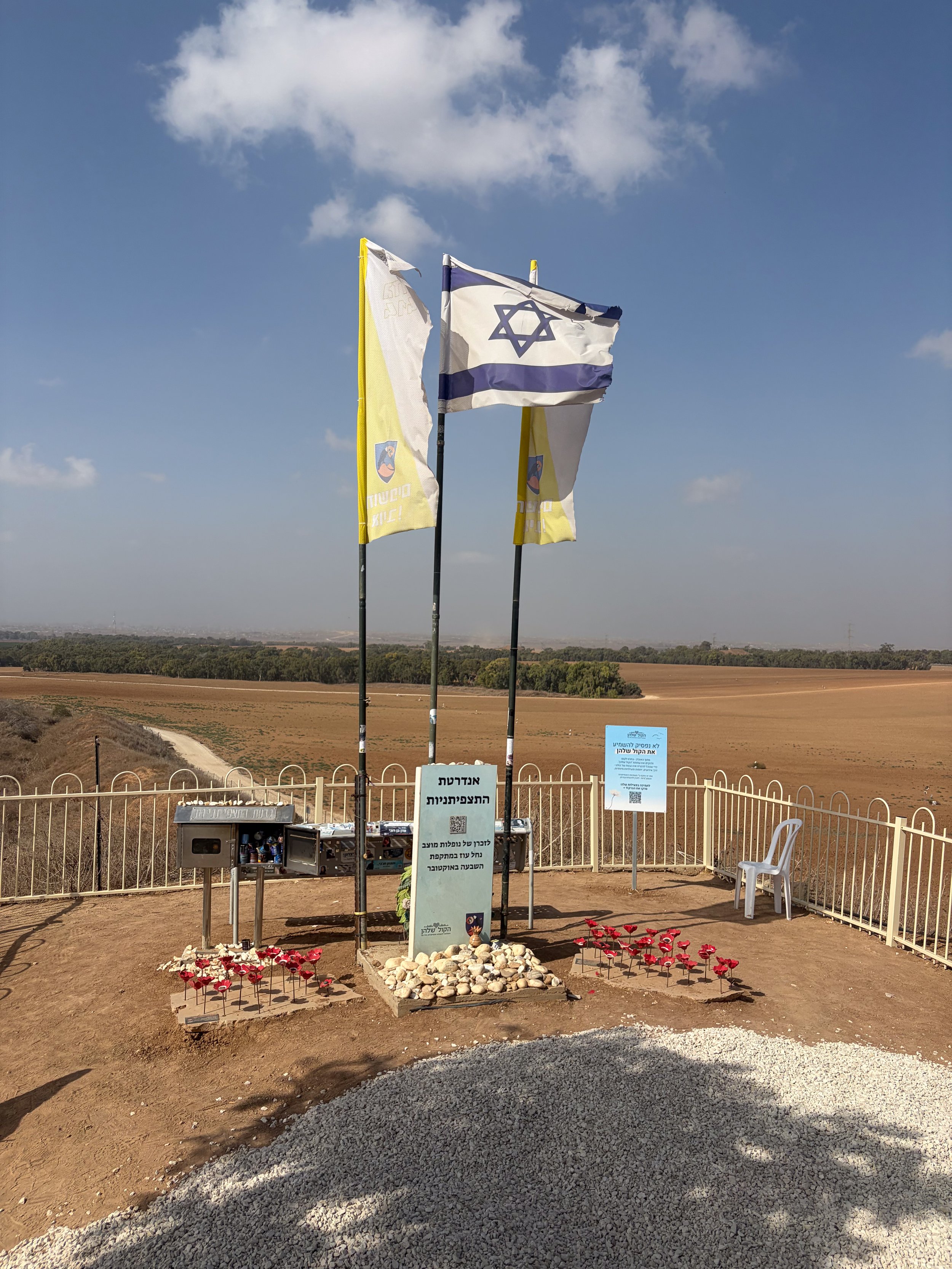
On October 7, they were ambushed. Some were killed; others were abducted into Gaza.
Standing at their memorial, I found myself thinking about how many of these young women were barely out of high school. They were doing their jobs, watching, observing, and trying to protect the people and communities around them. Their lives, their warnings, and their stories deserve to be remembered.
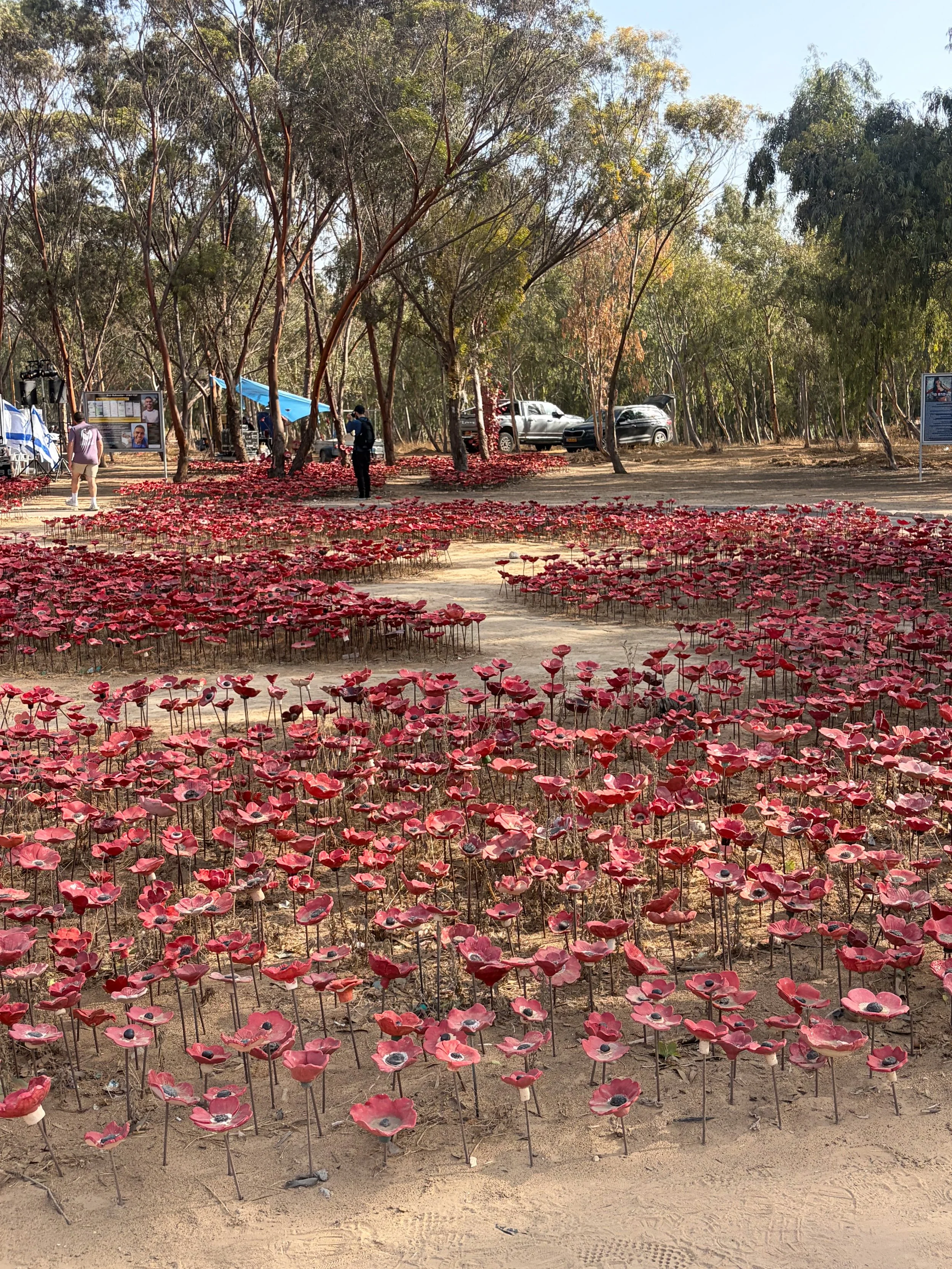
We also saw the poppies that have become such a poignant presence at Nova and at the many memorial sites throughout the country. Each flower is a small reminder of an enormous loss.
Our visit to the new memorial and community center in Sderot offered another perspective on October 7. Sderot is a city that has lived under the threat of rocket fire from Gaza for decades. It is a community that knows what it means to live with fear, disruption, and resilience.
The new center represents something important: a place not only to remember what happened but to gather, reconnect, tell stories, and begin the work of rebuilding community. Memorials preserve the memory of those we lost. Community spaces help the living find their way forward. We need both.
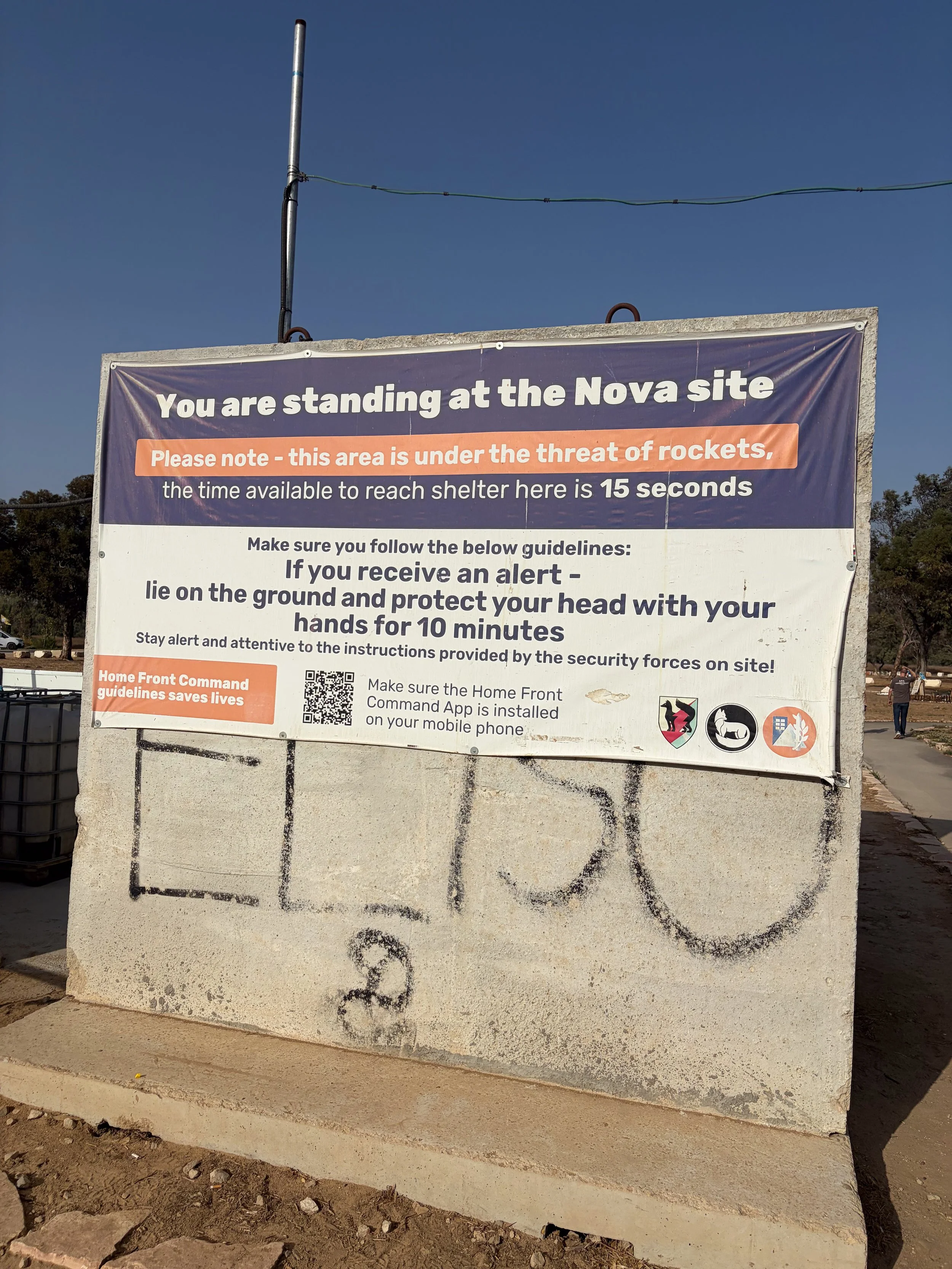
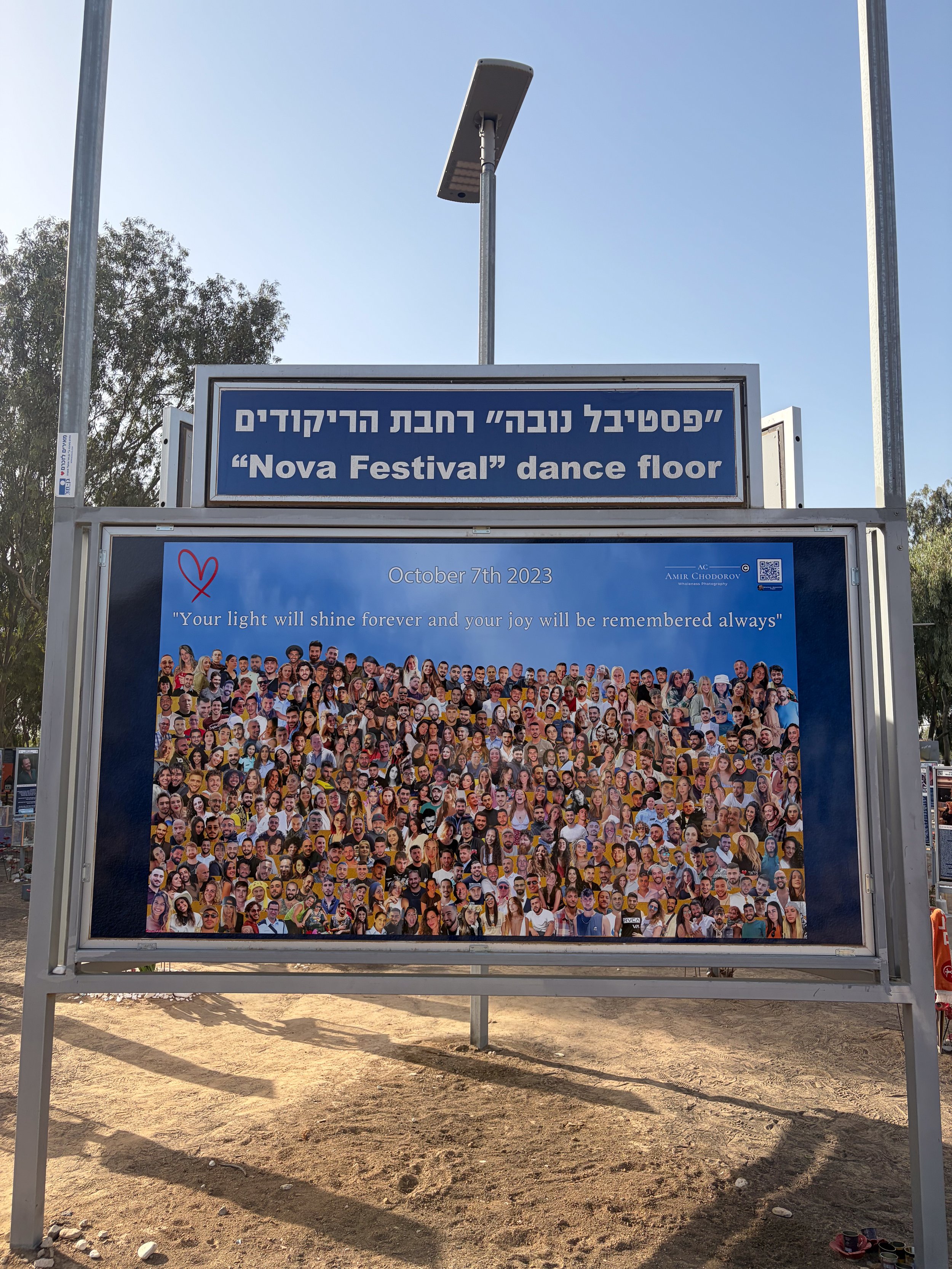
I found myself thinking about something that has changed for me since October 7. For years, when we brought groups to Israel, our most solemn visit was to Yad Vashem, Israel's Holocaust memorial and museum. We would leave profoundly moved, committed to remembering, and determined that such hatred would never again threaten the Jewish people.
Now there are so many more memorials. Nova. The kibbutzim. The military bases. The homes and communities where people were murdered or abducted.
And I find myself asking a question that I never imagined I would ask: Will my children bring their grandchildren to Israel someday and have yet another memorial to visit? Will there be another place where we stand and tell the story of Jews who were murdered simply because they were Jews?
I find myself praying that we will never need to build another one.
I want my children and grandchildren to visit Israel to experience its extraordinary beauty, its history, its food, its humor, its music, its people, and its remarkable capacity for life. I want them to know the stories of our past, but I don't want their experience of Jewish history to be defined by one memorial after another.
And then, because Israel is Israel, there was a little comic relief. We spotted Boy George and his entourage. It was nice to have a celebrity sighting that didn't require us to check another name off our October 7 memorial list.
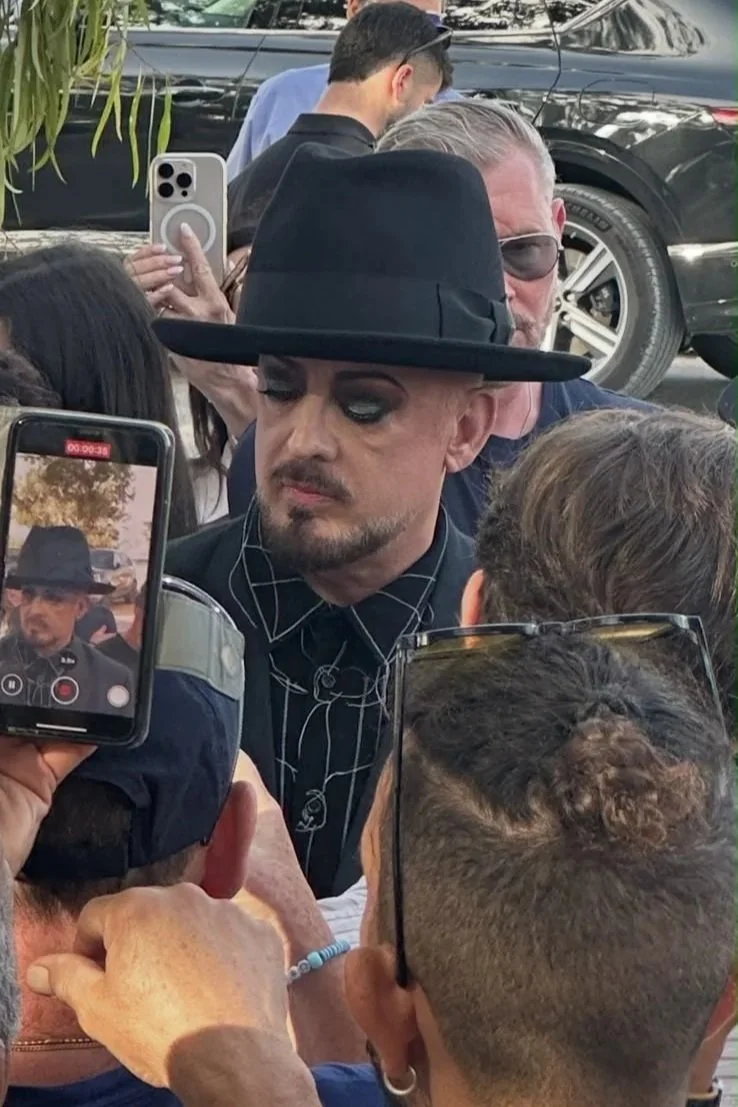
A day of extraordinary beauty, unimaginable sadness, courage, gratitude, and hope. That's Israel. Sometimes all in the same hour.
We will end the day at the Erez Crossing, where we’ll have the opportunity to meet with Company B of the 7th Battalion of the Jerusalem Brigade. This company of approximately 40 soldiers will welcome us for an informal visit. We’ll spend time talking with them, hearing a little about their experiences, and, most importantly, sharing a meal together—pizza and pasta for dinner. After a day spent listening to stories of October 7 and remembering those who were lost, it will be especially meaningful to sit with the young men and women who continue to serve and protect Israel today. Sometimes the most important thing we can do is simply show up, listen, and let these soldiers know that Jews from around the world are thinking of them and are grateful.